
Building the health system needed for Uganda’s tenfold growth ambition
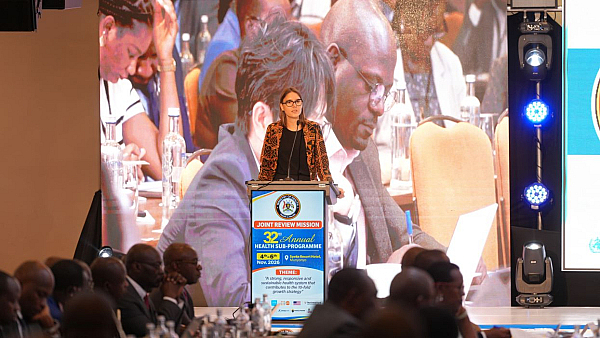
As Uganda pursues its ambition of becoming a USD 500 billion economy, leaders from government, development partners, local governments, civil society and the private sector gathered at the 32nd Health Sub-programme Joint Review Mission to examine a critical question: how can the country build a strong, responsive and sustainable health system that supports long-term economic growth?
The annual review comes at a pivotal moment for Uganda’s health sector. Over the past three decades, reforms have expanded access to services, improved child and maternal survival, increased life expectancy and strengthened responses to major diseases, including HIV, tuberculosis and malaria. These gains were made possible through government leadership, community participation and long-standing partnerships.
However, Uganda’s health needs are changing. Noncommunicable diseases are increasing, the population is growing, and health systems continue to face pressure from emerging epidemics, climate-related health risks and workforce shortages. At the same time, global health financing is declining, increasing the need for sustainable domestic investment.
In his opening remarks, Dr Chris Baryomunsi, the Hon Minister of Health, called for honest reflection and collective action.
“Let us celebrate achievements where progress has been made, but let us also candidly confront the challenges that continue to impede our performance. Through honest reflection and evidence-based decision-making, we can identify practical solutions that will accelerate our journey towards Universal Health Coverage and national development,” says Dr Baryomunsi.
Under the theme “A strong, responsive and sustainable health system that contributes to the 10-fold growth strategy,” participants reviewed health sector performance, financing, quality of care, service delivery and reforms needed to strengthen the health system over the coming years.
Speaking on behalf of Dr Kasonde Mwinga, the WHO Representative to Uganda, Ms. Kira Koch, the Team Leader for Health Systems and Services at WHO Uganda emphasized the need for health to be viewed as an investment rather than a cost.
“The question before us is not only what health costs. It is what under-investing in health costs Uganda. A healthy population is a productive population, and a productive population drives national development,” said Ms. Koch.
She further highlighted three priorities for the future, including strengthening primary health care, investing in preparedness before crises occur and increasing sustainable domestic financing for health. She noted that strong health systems protect lives while also supporting productivity, resilience and economic growth.
Participants also reflected on Uganda’s response to recent public health emergencies, including Ebola and mpox outbreaks, which demonstrated the importance of surveillance systems, laboratories, community engagement and a skilled health workforce.
The review mission also provided a platform to launch the Annual Health Sector Performance report for the financial year 2025/26, which was developed with technical support from WHO and other partners. The review mission is expected to generate recommendations in the Aide Memoire to guide future investments and reforms as Uganda works towards Universal Health Coverage and broader national development goals.
As stakeholders look ahead, one message continues to resonate throughout the discussions: health is not only a social service, but also a foundation for human capital, economic productivity and national prosperity.
Distributed by APO Group on behalf of WHO Regional Office for Africa.
Distributed via APO Group / Africa Newsroom
View original ↗