
Congo: Continuity of care in Lita: A hospital transformed by the Ebola response
When the Ebola outbreak struck Ituri province, the Lita General Reference Hospital (HGR) found itself on the front line, facing unprecedented pressure. Dilapidated infrastructure, a shortage of beds, and the absence of a functional laboratory made patient care extremely difficult, both for Ebola patients and for others not affected by the Bundibugyo virus. “From the very beginning, internal medicine unit was urgently targeted to receive Ebola patients, and it was not easy. We had to put two patients together on the same bed,” recalls Dr Alphonse Abekani Jawotho, the hospital’s medical director.
This situation had a considerable impact on attendance at this referral health facility. The maternity ward, which averaged 80 deliveries per month, saw that number cut in half in the first weeks after the outbreak was declared. In June, only 42 deliveries were performed, reflecting the community’s mistrust of a hospital that had become an Ebola treatment centre.
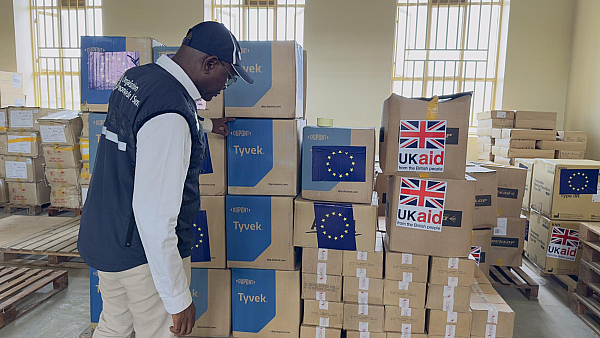
To expand capacity and provide facilities that met safety standards in the context of the outbreak, the World Health Organization (WHO) installed three tents and supplied 29 beds and mattresses for maternity and pediatrics. Beyond beds, support included essential equipment such as oxygen concentrators, monitoring devices, personal protective equipment (PPE), and medicines. “The PPE we received was sufficient to cover our needs for three to four months,” notes Dr Jawotho. The hospital also received two new ambulances dedicated to the Ebola response, while the old ambulance continues to serve other patients.
These investments enabled the hospital not only to respond immediately to Ebola but also to ensure continuity of care for the wider population, improving patient comfort and reducing exposure risks.
With these reinforcements and measures that reassure the community, Lita Hospital is gradually regaining its clientele. When four year old Dieuveille* was injured in a traffic accident, his mother did not hesitate to travel 12 kilometers from Limani, in the Nizi health zone, to Lita. Suffering from trauma, the boy has been treated in pediatrics for 10 days. “We are no longer afraid to come to the hospital here. Moreover, the staff are doing their job well. Since we arrived, my son is getting better, and I hope we can go home soon,” says Aimerance, Dieuveille’s mother.
The quality care praised by Aimerance stems from an intensive training conducted for more than 600 health workers across all categories, from internal medicine to maternity to hygiene staff. Additionally, a borehole was also installed to strengthen infection prevention and control (IPC) measures. These improvements transformed the way pregnant women and newborns are cared for, while guaranteeing free pediatric services.
The Lita experience illustrates a holistic approach to epidemic response while ensuring continuity of primary health care. “The Lita health zone will play a central role in managing not only Ebola virus disease but also in strengthening the health system,” says Dr Célestin Kambale Ndaliko, WHO field coordinator in the Lita health zone.
WHO, alongside other partners, helped reinforce basic services within the hospital. Coordination under the leadership of the Ministry of Health, in collaboration with community committees, integrated these gains into a sustainable dynamic. “The Ebola response served as a lever to profoundly transform the overall quality of our local health system. We moved from a one off emergency response to a dynamic of sustainable consolidation of our infrastructure,” emphasizes Dr Patience Pacifique Lokengama, chief medical officer of the zone.
Investments improved biosafety, hygiene, access to safe water, and medical waste management, strengthening community trust in the facility. Key services were particularly consolidated. Pediatrics and neonatology now welcome children in safer conditions, with reorganized care pathways. Maternity benefits from access to water and sanitation, ensuring more dignified and secure deliveries. Finally, the establishment of triage and IPC circuits allows suspected cases to be isolated quickly without interrupting general care.
Lita is no longer just an Ebola response centre: it has become a health hub attracting patients beyond its zone, a model of resilience and solidarity for the entire region.
In maternity, services are gradually returning to normal. In September, 56 deliveries were performed. Miriam, 39, a resident of Linji in the Nizi health zone, has just given birth at Lita’s maternity ward. Rocking her newborn gently, she expresses satisfaction with the care she received. “I can see that the service has improved. As soon as you arrive, you go through triage, and if you don’t show signs of Ebola, you are quickly redirected. And everything goes very well,” says Miriam. “The beds are very comfortable,” she adds with a hearty laugh.
Distributed by APO Group on behalf of WHO Regional Office for Africa.Distributed via APO Group / Africa Newsroom
View original ↗