East African Community (EAC) Urges Partner States to Use Water and Sanitation Data to Close Gaps in Services
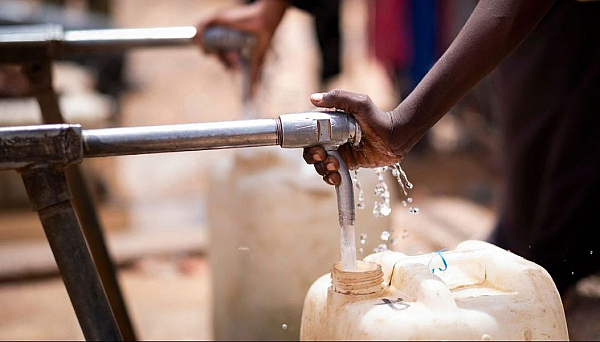
The East African Community (EAC) Secretariat has called on Partner States to make the regular collection and use of water and sanitation statistics a national priority. In 2025, 70 percent of households across the Community could collect safe drinking water within 30 minutes, according to EAC Facts and Figures 2026.
Marking the 2026 African Statistics Day on 18 November, under the continental theme, “Institutionalising Water and Sanitation Statistics for Sustainable and Climate-Resilient Development in Africa,” the EAC Secretariat urged Partner States’ governments to use water and sanitation statistics to guide investment initiatives to areas where new connections or more reliable services would benefit households.
According to EAC Facts and Figures 2026, the share of households across the Community that could collect safe drinking water within 30 minutes rose from 69 percent in 2022 to 70 percent in 2025. Over the same period, the share of rural households able to collect safe drinking water rose from 62 to 67 percent across the Community and from 34 to 44 percent in South Sudan.
In 2025, 87 percent of urban households across the Community could collect safe drinking water within 30 minutes, compared with 67 percent of rural households, a difference of 20 percentage points. In the Democratic Republic of the Congo, the corresponding figures were 90 percent for urban households and 43 percent for rural households, a difference of 47 percentage points. These comparisons can help planners decide where to extend water networks to shorten the journey for households that spend the most time collecting water.
Collection time measures how readily a household can reach a water source. A safely managed drinking water service must also provide water from an improved source on the household’s premises, be available when needed and be free from faecal and priority chemical contamination.
The EAC Health Statistics Report 2025 records gains in safely managed sanitation between 2020 and 2025. The share of the population using these services rose from 48.0 to 67.7 percent in Rwanda, from 26.9 to 39.0 percent in the United Republic of Tanzania and from 19.0 to 32.0 percent in Uganda. Safely managed sanitation means that a household has an improved toilet for its own use and that waste is safely disposed of on site or removed for treatment.
“Stronger coordination between statistical offices and sector institutions, supported by clear responsibilities and sustained resources, will be vital,” the Secretariat said in its goodwill message. By bringing household survey findings together with utility records and water-quality tests, statistical offices, water ministries and utilities can help local authorities distinguish communities that need a new water point from those were repairing a pump or treating a contaminated supply would restore service.
“For the East African Community, the theme holds particular significance given our shared water resources and the interconnected nature of our economies and ecosystems,” the Secretariat said. Where Partner States share a river or lake, falling water levels can disrupt supplies on both sides of a border, and flooding upstream can affect water quality downstream. By comparing water levels, water-quality tests and service records, neighbouring countries can identify communities at risk and coordinate their response.
The EAC Secretariat commended the institutions, researchers and data users who contribute to official statistics across the Community. It reaffirmed its commitment to working with Partner States and regional and international partners to strengthen statistical capacity, harmonise methods and publish findings that help track progress towards EAC Vision 2050, the African Union’s Agenda 2063 and Sustainable Development Goal 6 on clean water and sanitation.
Distributed by APO Group on behalf of East African Community (EAC).
Distributed via APO Group / Africa Newsroom
View original ↗