
South Sudan strengthens readiness for Bundibugyo virus disease
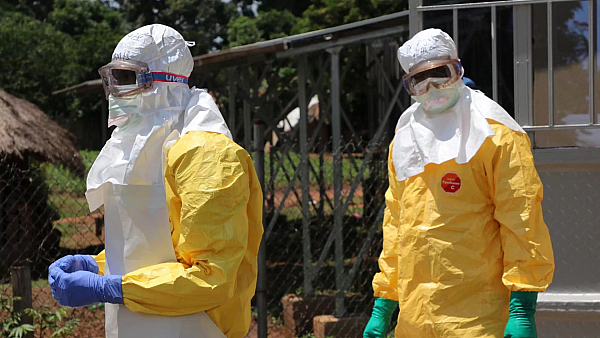
South Sudan has taken steps to improve its ability to detect and respond to a potential Bundibugyo virus disease (BVD) outbreak, following the declaration of the outbreak in neighbouring Democratic Republic of the Congo on 15 May 2026.
The country conducted four successive national readiness self-assessment in 2026, using a WHO tool that reviews the quality of core functional areas of an emergency response. The assessment showed that the country’s readiness score increased from 29% in May 2026 to 72.5% in October 2026. It also identified gaps in preparedness and informed efforts to improve surveillance, screening, isolation and referral.
Furthermore, the country conducted a sub-national risk assessment that identified 15 high-risk counties to help authorities identify priority areas for targeted preparedness activities and resource allocation. Prioritization was based on proximity to affected areas in the Democratic Republic of the Congo, known population movements, location of formal and informal border crossings, surveillance gaps and local vulnerabilities.
The WHO African Region’s artificial intelligence (AI)-enabled Preparedness Data Exchange (PDX), which integrates preparedness and risk data to inform early, evidence-based decisions across the region, supported the analysis.
In June 2026, 50 national public health institute workers, supported by 20 national and international partner agencies, participated in scenario-based table-top simulation exercise aimed at testing the completeness and comprehensiveness of the country’s BVD preparedness and readiness plan.
Between July and September, health authorities conducted drills at newly established isolation facilities and the National Public Health Laboratories. A specific infection prevention and control drill was organised at the national level to improve the skills of national rapid response team members and their implementing partners in use of personal protective equipment, chlorine preparation and use and disinfection of potentially infectious materials.
From 19 to 24 October 2026, the country conducted a full-scale simulation exercise to test how its emergency response systems would function during a potential BVD outbreak. The exercise brought together 93 participants from Ministry of Health, government institutions, WHO, United Nations agencies and implementing partners. The week-long exercise allowed teams to assess functional status of the response areas, the hand-offs between these areas, how they share information, coordinated their actions and carry out their responsibilities.
“The simulation exercise allowed South Sudan to identify strengths and best practices, close gaps and define priorities to improve national capabilities to safely identify and isolate suspected BVD cases, protect the lives and health of our prized health workers and indeed the people of South Sudan,” said Honourable Dak Duop Bichiok, Caretaker National Minister of Health of South Sudan.
With support from WHO, the Ministry of Health activated its Public Health Emergency Operations Centre (PHEOC) to coordinate preparedness activities and bring together response teams and partners. The PHEOC coordinates and monitors BVD preparedness and readiness plan implementation. It also functions as an accountability centre, where roles and responsibilities are assigned to the many team members needed for BVD readiness.
“Systems were activated, with teams and resources deployed to high-risk areas to strengthen coordination, early detection, infection prevention and control, safe and dignified burial, case management and risk communication and community engagement,” said Dr Ader Macar Aciek, Acting Executive Director, National Public Health Institute in South Sudan. “The recently concluded full scale simulation exercise tested the country’s capabilities for Ebola outbreak containment before we are contained by the virus itself.”
The simulation exercise showed that South Sudan can detect BVD in all simulated sites, including one of the 26 priority points of entry that connect it with neighbouring countries with BVD cases.
“Preparedness cannot wait until a case is detected. WHO is working with South Sudan and partners to identify gaps, strengthen response capacities and ensure that teams are ready to act quickly,” said Dr Moses Ongom, Officer-in-Charge at WHO South Sudan. “With the outbreak ongoing in the Democratic Republic of the Congo, maintaining readiness across the region is essential to detecting cases early and preventing further spread of Ebola.”
Distributed by APO Group on behalf of WHO Regional Office for Africa.
Distributed via APO Group / Africa Newsroom
View original ↗