The Africa Health Data Forum aims to turn health data into lifesaving action
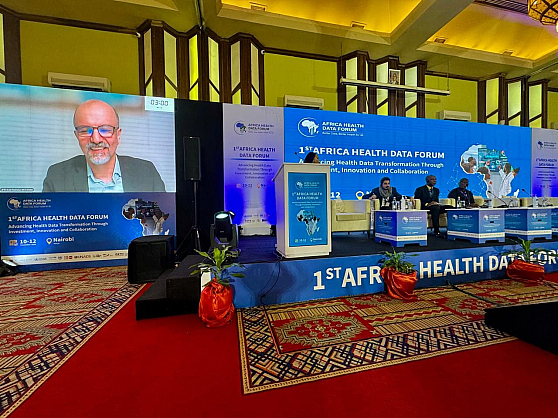
The WHO Regional Office for the Eastern Mediterranean and the WHO Regional Office for Africa, together with other UN agencies and partners, kicked off the first edition of the Africa Health Data Forum on 10 November.
Taking place in Nairobi under the theme “Better Data, Better Health for All”, the Forum places countries at the centre of discussions about ways to improve the availability and use of health data across Africa, the challenges, priorities and solutions.
Bringing together WHO experts, Member States, development partners, technical institutions, academia, civil society and the private sector, the Forum opened with discussions on the vital role of health data in saving lives and in strengthening health systems.
Participants underlined how reliable, timely and comprehensive data are essential to understand the health needs of populations, plan effective services and ensure that resources are targeted to reach those who need them most.
“True health equity across Africa begins with the power of reliable, actionable data. As our health systems evolve, we must move beyond fragmented tracking and build unified, country-owned digital architectures,” said Dr Arash Rashidian, Acting Director for the Health Systems and Life Course department at the WHO Regional Office for the Eastern Mediterranean.
African countries from the WHO Eastern Mediterranean Region – Djibouti, Egypt, Libya, Morocco, Somalia, Sudan and Tunisia – have made significant progress in strengthening their health information systems through investments in data generation, digitalization, analytics and data use. The seven countries are home to nearly 250 million people, representing around a third of the Eastern Mediterranean Region’s population.
Progress, though, remains uneven. Gaps persist in the availability, quality, accessibility and use of health data, and in the capacity of health information systems to respond to evolving health needs. The consequences are particularly serious in conflict-ridden and emergency settings, where insufficient data can leave entire communities overlooked, their health needs unidentified and their access to essential services limited.
“Even when health facilities are no longer functioning, effective surveillance tells us where diseases are spreading, which threats are emerging and where every dose and every dollar must go,” said Dr Adham Ismail, Officer-in-Charge of the WHO Regional Office for the Eastern Mediterranean, in remarks delivered virtually during the opening session.
Closing critical data gaps helps ensure that every person counts. Recording every birth, death and its causes is the first step.
Health workers must be equipped to detect threats early. Countries must then turn data into action by connecting health information systems within countries and across borders, reinforcing the ability to direct services to underserved populations and make the best use of available resources.
“Let us leave Nairobi with concrete, country-led commitments: to detect threats earlier, count every person, reach those left behind, and use every available resource to save more lives,” said Dr Ismail.
Distributed by APO Group on behalf of World Health Organization – Regional Office for the Eastern Mediterranean.
Distributed via APO Group / Africa Newsroom
View original ↗