In Kano, in northern Nigeria, in 1957, a boy was born into a family whose patriarch had once been the richest man in all of West Africa. The weight of that inheritance — not money, but expectation — would shape everything. Aliko Dangote started with a $500,000 loan from his uncle, a trading operation in cement and commodities, and a belief so ordinary-sounding it almost conceals its audacity: that if you manufacture what people need, in a country that needs almost everything, you will be fine.
He was more than fine. He built the most consequential private business empire on the African continent — and in 2025, he made history.
From Cement to Crude
Today, Dangote is the richest person in Africa, the wealthiest Black individual on earth, and — as of late 2025 — the first African-born billionaire to cross the $30 billion threshold. Bloomberg’s Billionaires Index placed his net worth at $30.6 billion in November 2025. Forbes, using different valuation methods, estimated it at $26.2 billion around the same period, but by 2026 their figures had converged closer to $32.5 billion. The gap between methodologies matters less than the direction of travel, which has been, for the past three years, relentlessly upward.
The engine of that ascent is the Dangote Petroleum Refinery — a $20 billion oil refinery on the Lekki peninsula in Lagos that began operations in early 2024. It is the largest refinery in Africa, with a capacity of 650,000 barrels per day. Dangote owns 92.3% of it. The refinery has reshuffled Nigeria’s entire energy economy and forced NNPC, the state oil company, into a new kind of negotiation. It also added an estimated $18.6 billion in private valuation to Dangote’s personal balance sheet almost overnight.
The Empire Beneath the Numbers
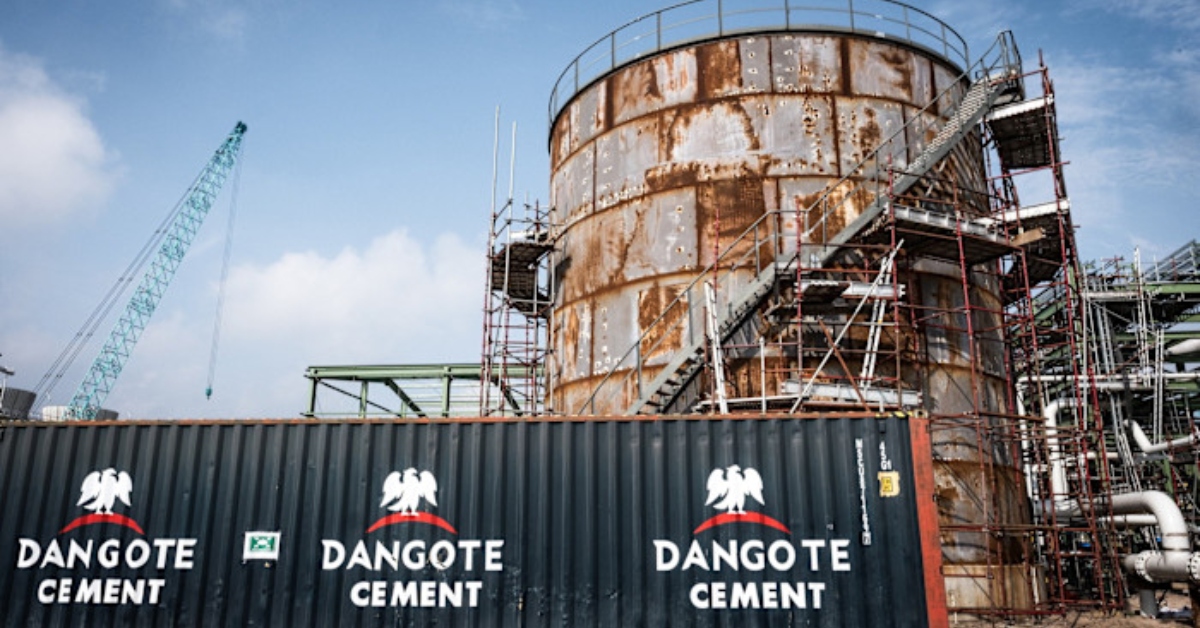
Behind the headline figure lies a sprawling industrial ecosystem. Dangote Cement — listed on the Nigerian Stock Exchange, where Dangote holds 87.45% — is sub-Saharan Africa’s largest cement producer, with a market value above $6.8 billion after its shares rallied sharply in 2025. Dangote Sugar Refinery, Nascon Allied Industries, and a fertilizer plant capable of producing 2.8 million tonnes of urea annually complete the publicly traded portion of his empire. In 2025, Dangote Cement’s new 3-million-tonne-per-year plant in Attingué, Côte d’Ivoire, came online.
His private holdings include Lagos real estate, landholdings in the Lekki Free Trade Zone, oil mining licences, and a private jet fleet. His wealth office is managed in Dubai by his daughter Halima. He owns a stake in United Bank for Africa.
In May 2025, through Africa Travel Investments, Dangote acquired Pollman’s Tours and Safaris in Kenya — one of the oldest tourism firms in East Africa — for KES 4 billion. Even his diversifications are industrial in scale.
Nigeria Distilled — and What It Means for Investors
To understand Dangote is to understand something essential about Nigeria: that its private sector has long had to substitute for its public one. While government institutions struggled with infrastructure deficits, Dangote built roads to his cement plants, power stations for his factories, and eventually a refinery that the state should have built decades ago. He has, in a structural sense, filled a governance gap with capital.
His net worth in January 2025 was $28.1 billion. By October of that year, it crossed $30 billion — the first time any African had done so. Bloomberg’s Index by March 2026 had him at $32.5 billion, ranked 63rd among the world’s richest individuals. Nigeria’s four largest billionaires collectively held around $43 billion that same month, up from roughly $24.8 billion just one year earlier. For investors tracking African private sector growth, the trajectory of Dangote’s empire is one of the clearest signals of where the continent’s industrial concentration is headed.
Whether that concentration is good for Nigeria as a whole is the question his country cannot stop asking. What is harder to dispute is that the $20 billion refinery is running, exporting fuel, and reshaping Nigeria’s energy economics in ways no government had managed to deliver.
He borrowed $500,000 to trade cement. He built a continent’s largest refinery. The question was never whether he would succeed — it was always how far success could travel.