
The Quiet Work of Becoming: Why Africa’s Future Will Be Shaped by Leaders Who Lead from Within

By Nqobile Pamela Xaba
Africa is often described through the language of potential. The world’s youngest population. The fastest-growing urban centres. A thriving entrepreneurial ecosystem. Abundant natural resources. A rapidly expanding digital economy.
These are important indicators of possibility. But beneath every conversation about Africa’s future lies a more fundamental question: What kind of leaders will shape the continent we are becoming?
For decades, leadership conversations have focused on strategy, governance, innovation, economic growth, and institutional reform. These remain essential. Yet as Africa navigates increasingly complex challenges, from climate adaptation and technological disruption to youth unemployment and social transformation, there is growing evidence that our greatest leadership challenge may not be technical.
It may be human. The future of Africa will depend not only on what we build, but on who we become while building it.
Beyond Performance Leadership
We live in an age that rewards visibility. Leaders are expected to move quickly, speak confidently, project certainty, and deliver results under pressure. Social media amplifies visibility. Organisations celebrate constant productivity. Public life often rewards performance over reflection.
Yet some of the most transformative leadership work happens far from public view.
It happens when leaders choose to listen before they respond. When they become curious instead of defensive. When they create space for difficult conversations. When they notice what others overlook. When they have the courage to confront uncomfortable truths about themselves, their organisations, and the systems they lead.
This is the quiet work of becoming.
It is the inner work that shapes the outer impact of leadership. And it may be one of the most important investments Africa can make in its future.
The Leadership Capability We Rarely Talk About
Across boardrooms, government institutions, development agencies, universities, and community organisations, leaders are increasingly being asked to navigate uncertainty.
The challenge is no longer simply managing change. The challenge is leading through complexity. Complexity requires something different from traditional leadership models.
It requires presence. Not merely physical presence. Relational presence. The ability to pay attention to what is happening beneath the surface. To recognize when trust is eroding before a crisis emerges. To notice when innovation has become constrained by fear.
To hear what is not being said. To understand that every organization has conversations taking place in meeting rooms and conversations taking place in silence.
Often, the silence tells us more.
In many African cultures, wisdom begins with listening. Long before leadership theories were taught in business schools, our communities understood the value of observation, discernment, and collective reflection.
Perhaps one of the opportunities before us is not to discover entirely new leadership models, but to reconnect with wisdom we have always known.
Why Presence Matters in a Fast-Changing Africa
As Africa’s economies grow and our societies become increasingly interconnected, the quality of leadership relationships will become as important as the quality of our infrastructure.
Trust has become a defining currency of modern leadership. People want to work in organisations where they feel respected. Young professionals want leaders who are authentic. Communities want institutions that are accountable. Citizens want leadership they can believe in.
Investors want environments where confidence can grow.
Trust cannot be demanded. It must be cultivated. And trust grows where presence exists. It grows when leaders create environments where people feel seen, heard, and valued. It grows when people are treated not merely as resources to be managed, but as human beings capable of contributing meaningfully to a shared purpose.
Curiosity as a Competitive Advantage
One of the most underestimated leadership qualities is curiosity. In a rapidly changing world, leaders who believe they already have all the answers often become the least adaptable. The leaders who thrive are those who remain learners.
They ask questions. They challenge assumptions. They seek perspectives different from their own. They understand that innovation rarely emerges from certainty.
It emerges from exploration.
Africa’s future will be shaped by leaders who are willing to ask: What are we not seeing?
Whose voice is missing? What assumptions are limiting our possibilities? What can we learn from one another?
The continent’s diversity is often discussed as a challenge to manage. Perhaps it is one of our greatest leadership assets. Diverse perspectives create stronger solutions. Curiosity creates the conditions for those perspectives to emerge.
From Managing People to Designing Possibility
The strongest organisations of the future will simply not manage performance. They will cultivate environments where people can thrive. Where belonging is intentional. Where dignity is protected. Where participation is encouraged. Where learning is continuous.
Where people feel safe enough to contribute their full intelligence. This shift requires leaders to move beyond control and towards stewardship. Beyond authority and towards influence. Beyond compliance and towards commitment.
The question is no longer: “How do I get people to perform?”
The question is: “What kind of environment am I creating for people to succeed?”
The answer to that question may determine whether our institutions merely survive change or lead it.
Africa’s Next Leadership Frontier
Africa’s next leadership frontier may not be found in technology, policy, or economics alone. It may be found in leadership formation. In developing leaders who understand that transformation begins within before it becomes visible around us.
Leaders who recognise that courage is not always loud. Sometimes courage is a pause. A difficult conversation. A willingness to listen. A commitment to reflection. An openness to learning. A decision to remain human in systems that often reward performance over authenticity.
The leaders who will shape Africa’s future may not be those who dominate the conversation. They may be those who create the conditions for better conversations to happen.
The Future We Are Becoming
Every generation inherits responsibility. Our generation’s responsibility is not only to build stronger economies, institutions, and systems. It is to build leaders capable of sustaining them. The work of becoming is often invisible. It happens in ordinary moments.
A question asked with genuine curiosity. A decision guided by values rather than convenience. A leader choosing presence over performance. Yet these moments shape cultures, organizations, communities, and ultimately nations.
As Africa continues to write its next chapter, perhaps the most important question is not simply what future we are building. It is who we are becoming as we build it. Because the future of Africa will not be determined solely by the strength of our infrastructure, our policies, or our markets.
It will be determined by the quality of our leadership.
And the most enduring leadership begins with the quiet work of becoming.
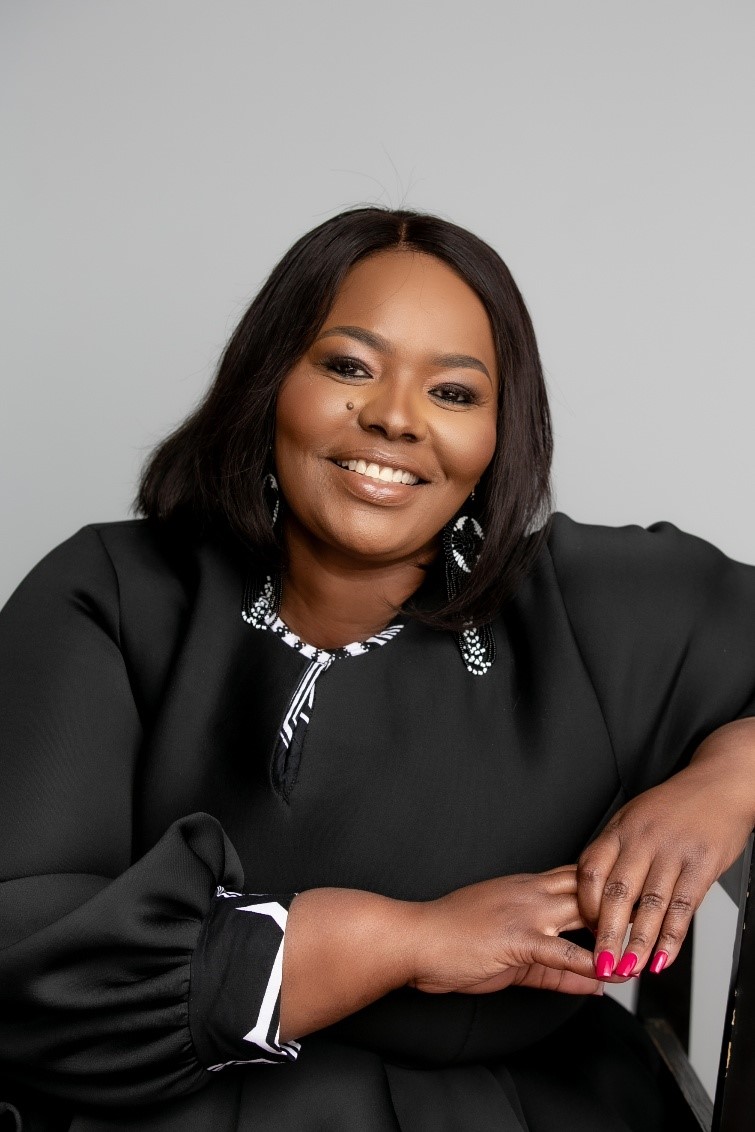
Nqobile Pamela Xaba is a Human Capital Entrepreneur, Professional Business Coach, Leadership Consultant, and author of the forthcoming book The People Circle: A Human-Centred Approach to Leadership in a Complex World. She is Founder of Nonkosi Coaching & Leadership and Chairperson of Inspired Growth NPC.
Nqobile Pamela Xaba | LinkedIn
Email: pamx@thepeoplecircle.co.za
Book Synopsis
The People Circle – www.thepoeplecircle.co.za
A Human-Centred Approach to Leadership in a Complex World
By Nqobile Pamela Xaba Available from 30 June 2026
The People Circle: A Human-Centred Approach to Leadership in a Complex World is a transformative exploration of leadership rooted in African wisdom, Ubuntu philosophy, and the belief that sustainable performance begins with people. Drawing on lived experience, leadership practice, and powerful storytelling, Nqobile Pamela Xaba challenges traditional