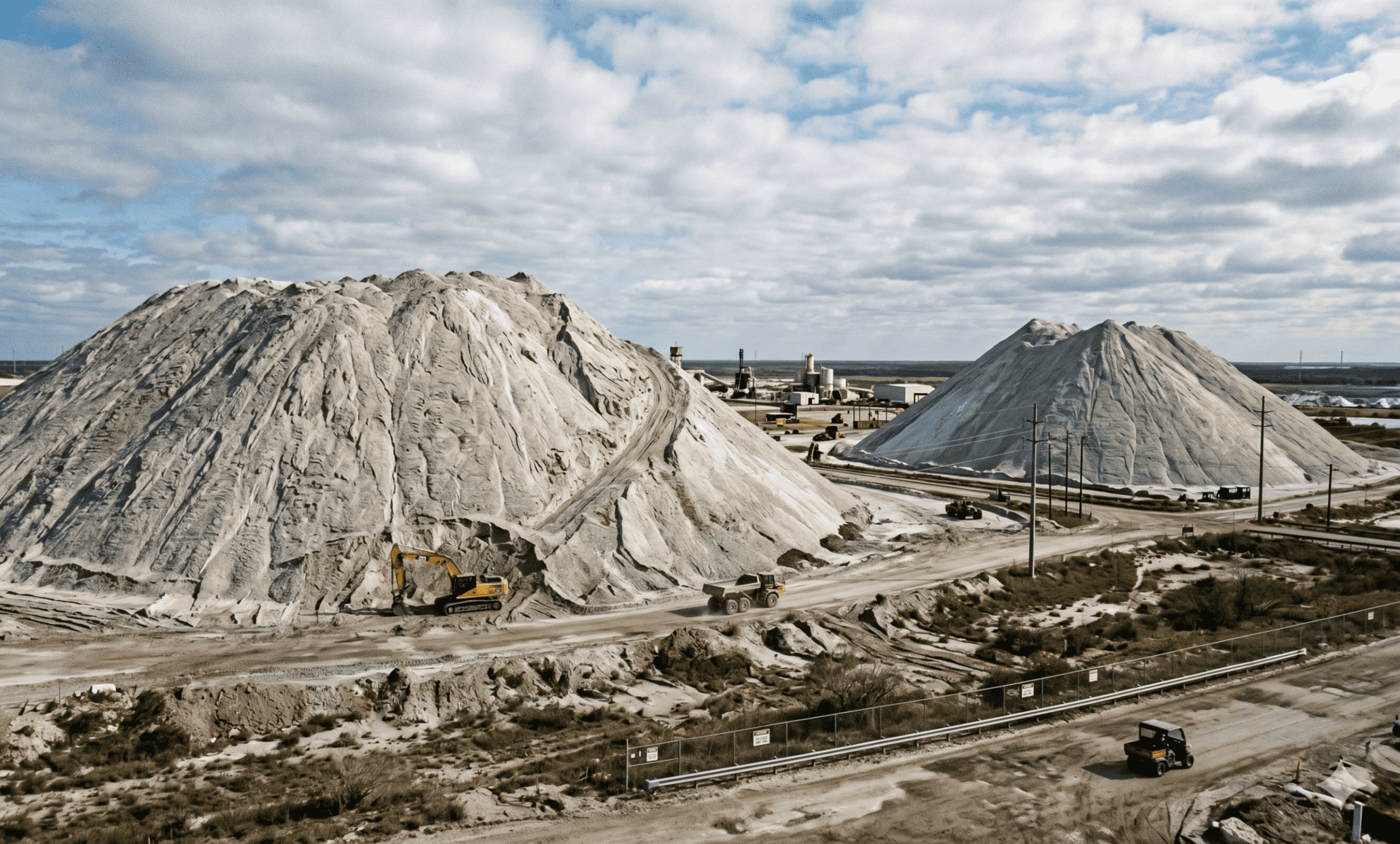
PHALABORWA, South Africa – Two enormous grey-white dunes of phosphogypsum tower over the old phosphate plant here in Limpopo province, relics of decades of mining that once fed fertilizer plants across the region. Today, those same waste stacks hold something far more valuable: 35 million tons of material rich in rare earth elements, the invisible backbone of everything from smartphone screens to electric motors and guided missiles.
Despite a bitter diplomatic chill that has seen the Trump administration slash almost all U.S. aid to South Africa, Washington is quietly doubling down on this unlikely patch of African scrubland. Through its International Development Finance Corporation, the U.S. has committed $50 million in equity to the Phalaborwa Rare Earths Project, channeled via Irish critical-minerals investor TechMet and its partner Rainbow Rare Earths. The money, first flagged at COP28 in 2023, is now moving forward even after President Trump’s February executive order halted broader assistance to Pretoria.
Rainbow executives say the project is no ordinary mine. Instead of digging fresh ore from the ground, engineers will reprocess the existing gypsum waste using a cleaner, lower-impact flowsheet developed with U.S. technology. Pilot plants have already produced mixed rare earth carbonate and high-purity neodymium-praseodymium oxide – the “magnet” rare earths Beijing controls in crushing volumes.
A definitive feasibility study, once due this year, has slipped to 2026, with construction slated for 2027 and first output targeted for 2028. Total capital needed sits around $317 million; the American cash is meant to de-risk the equity slice and lure other investors.
The strategic logic is blunt. China processes roughly 70 percent of the world’s rare earths and dominates refining of the high-value oxides needed for defense and green tech. U.S. officials, including those who visited the site with congressional staff in late 2023, see Phalaborwa as a tangible step toward supply-chain resilience. TechMet chairman Brian Menell has called it “one of the world’s most environmentally friendly and low-cost rare earth projects.” Rainbow chairman Adonis Pouroulis echoed the sentiment, telling investors the DFC backing validates “outstanding economic and ESG opportunities.”
Yet the timing could hardly be more awkward. Relations between Washington and Pretoria have plunged to their lowest point in years. South African officials accuse the U.S. of punishing the country over its neutral stance on Ukraine and its ties with BRICS partners. Local critics frame the investment as classic resource extraction dressed up in climate rhetoric – another chapter in Africa’s long history of being a pawn in great-power mineral games.
On the ground, though, the mood among project supporters is cautiously optimistic. The operation promises several hundred direct jobs during construction and steady employment once running, plus technology transfer in a province hungry for skilled work. Rainbow has already signed a letter of intent for gypsum by-product sales into the domestic market, turning one waste stream into another revenue line. Off-take talks with Western buyers are advancing.
Environmentalists remain watchful. Reprocessing phosphogypsum carries its own risks – acid leaching, water use, tailings management – though backers insist the closed-loop design beats traditional hard-rock mining. The project’s 16-year life is modest by mining standards, but its output of roughly 1,900 tons of separated rare earth oxides a year could still carve a meaningful non-Chinese niche.
For now the dunes sit quiet under the African sun, waiting for the heavy machinery. If the numbers hold and financing closes, Phalaborwa could become a modest but symbolically potent footnote in the global scramble for critical minerals – proof that pragmatism can sometimes trump politics, even when the two capitals are barely on speaking terms. Whether that pragmatism survives the next twist in U.S.-South Africa relations is anyone’s guess.