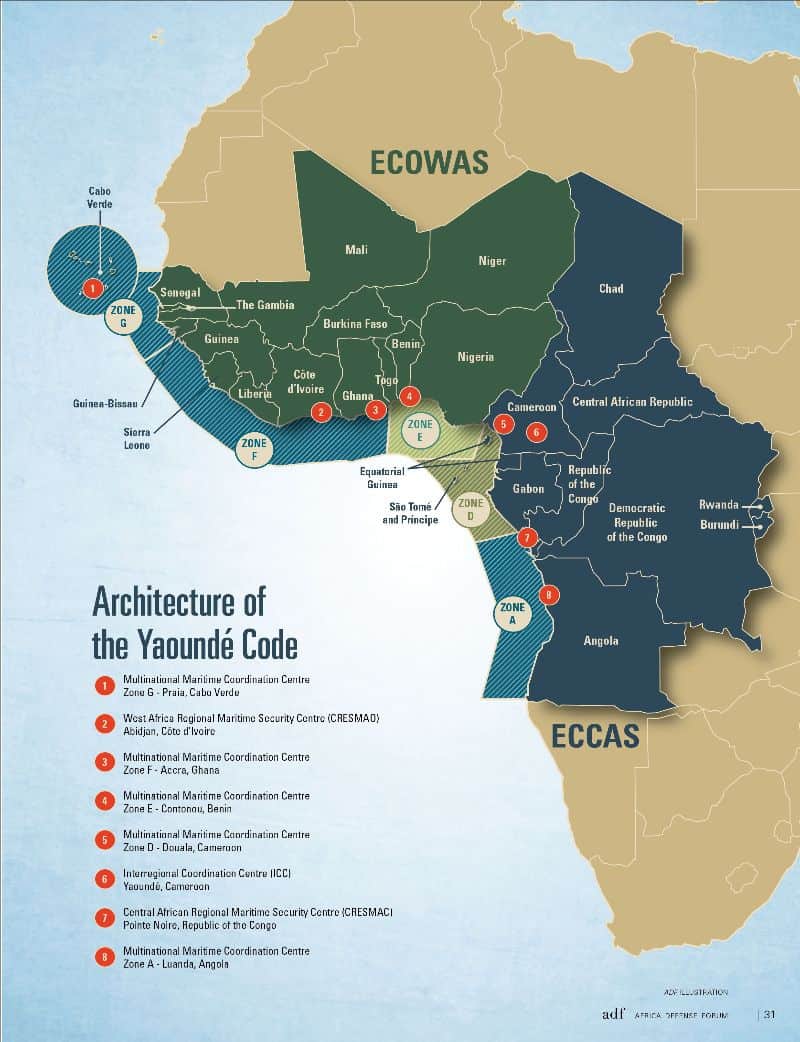
The Gulf of Guinea – a coastal region that stretches from Senegal to Angola – is endowed with vast reserves of hydrocarbon, mineral and fisheries resources. For a long time, however, countries in the Gulf of Guinea haven’t properly monitored what’s happening in their waters. This has allowed security threats at sea to flourish. The threats include illegal, unreported and unregulated fishing, drug trafficking, piracy and armed robbery, and toxic waste dumping. But in 2013, heads of state signed the Yaoundé Code of Conduct – a declaration to work together and address the threats. This also involved setting up a large hub, known as the Yaoundé Architecture (made up of different divisions), which coordinates and shares information on what’s happening at sea. Tools and systems – like Radar, Yaoundé Architecture Regional Information System (Yaris), Sea-Vision, Skylight and Global Fishing Watch – are integrating information from various surveillance and location monitoring systems and satellite data to identify suspicious behaviour. This has significantly helped to improve efforts to combat security threats.
Tuesday, May 26, 2026 - 06:56:19
Loading weather…