Publication shares four years of lessons on how services, designed well and delivered with intention, shape whether investment creates jobs for young women across Africa.
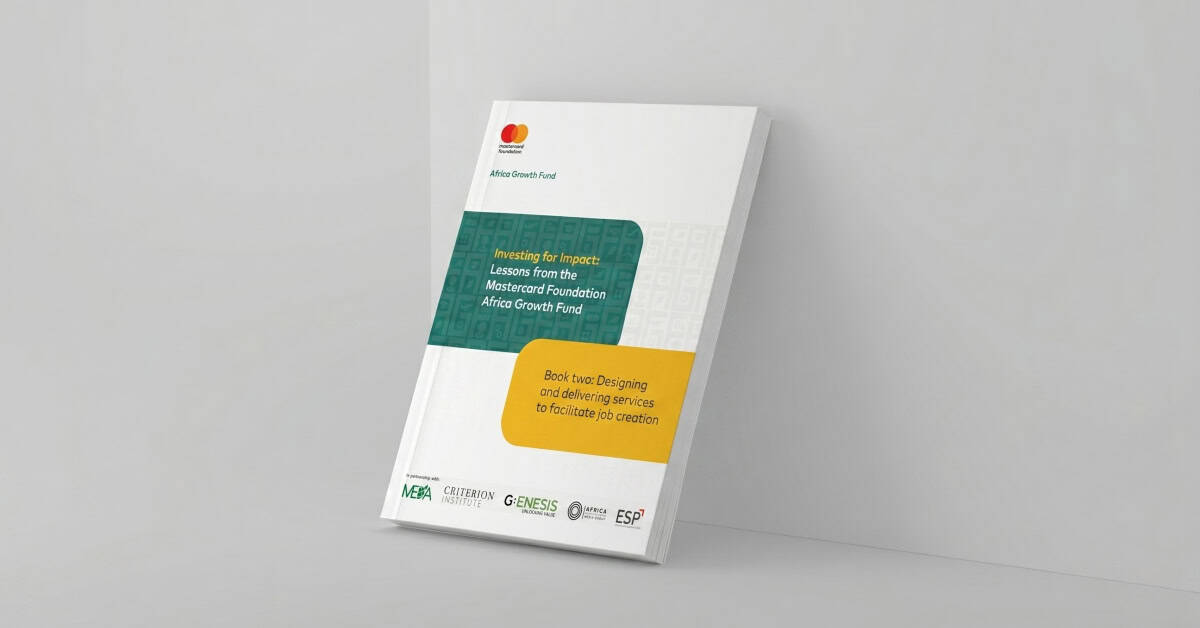
The Mastercard Foundation Africa Growth Fund has released its second Learning Book, Investing for Impact: Designing and Delivering Services to Facilitate Job Creation. The publication shares what the Fund has learned across four years of investing in African businesses and investment vehicles, with a particular focus on the role that services play in determining whether capital creates dignified, sustainable employment for young women.
When the Fund was designed, it included a $25M service facility alongside $150M in investment capital. That decision reflected a conviction that businesses need more than money to grow, become profitable, and create jobs that last. What the Fund learned in practice is that the how of service delivery matters as much as the what: who designs the services, whose knowledge is valued, when support is made available, and how power is shared between investors, service providers, and the entrepreneurs they work with.
As of January 2026, the Fund has created more than 10,799 direct jobs, with 41 per cent held by women and 43 per cent by young people, and more than 400,000 indirect jobs. Its target is 15,000 employment opportunities by 2027.
What the Fund found, is that whether capital creates jobs depends less on the amount invested and more on how services around that investment are designed, delivered, and governed, and on whose knowledge and priorities shape those decisions.
About the Publication
The Learning Book draws on four years of implementation across Nigeria, Kenya, Uganda, and beyond, including work with 122 service providers, 133 distinct service interventions, and structured assessments of 17 investment vehicles and 64 portfolio companies.
The book covers four areas of experience: how the Fund designed its service delivery model and what the tensions between investment timelines and service provision revealed; how it approached needs assessment and what a strengths-based approach looked like in practice; what it learned about engaging African service providers sustainably; and how the delivery of services, including the relationships they depend on, shaped outcomes on the ground.
Across each area, the book examines six dynamics that shaped how services were experienced: agency, expertise, timing, trust, risk sharing, and alignment. These describe real questions that came up repeatedly: who felt they could ask for a service and who did not, whose knowledge was treated as expertise, and who carried the risk when something did not go as planned.
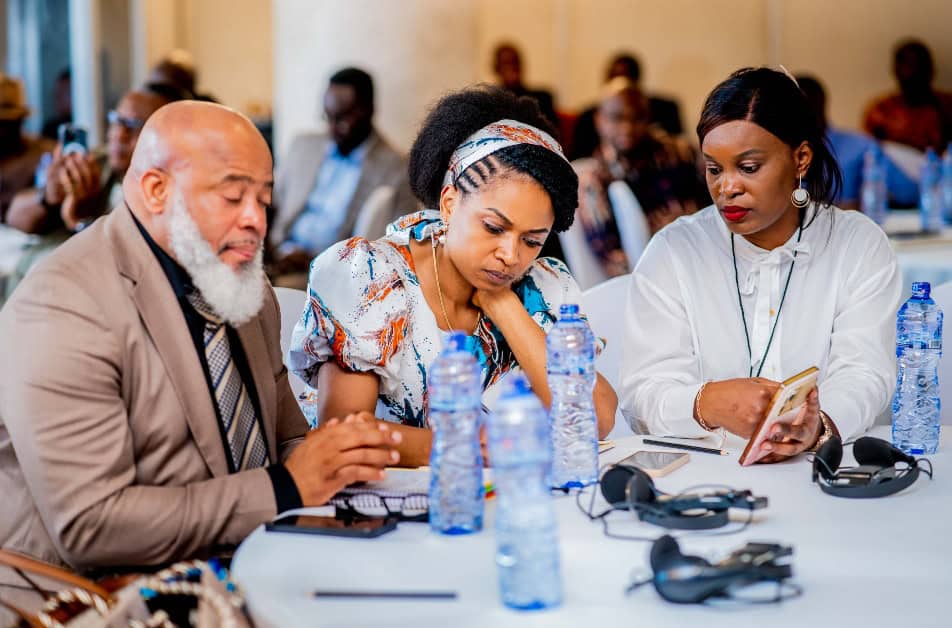
One area that generated significant reflection was gender. Investment vehicles across the Fund came into Criterion Institute’s gender-lens investing retreat at different stages of their thinking on gender, with many still exploring how it connected to their work in practice. By the end, 92 percent of participants reported a meaningful shift in how they understood gender, moving from a compliance obligation toward a lens for sharpening investment analysis. The book traces how that shift happened and where the work is continuing.
Ninety percent of all service interventions were delivered by African providers through a network built by partner Entrepreneurial Solutions Partners (ESP), the business development partner of the Africa Growth Fund. The Fund found that strengthening this ecosystem, supporting providers to formalize, building their administrative capacity, and treating them as knowledge holders, is not a secondary concern. It is part of what it means to invest in Africa’s economic future. Africa’s management consulting market is valued at $3.76 billion and growing, and how it develops matters.
The Fund also observed that many businesses in its portfolio needed support building stability as much as they needed support to scale. In economies that are dynamic and frequently volatile, services designed for resilience were often as valuable as those designed for growth. This remains an open question for the Fund about how investment support should be structured going forward.
Part of a Four-Part Learning Series
This is the second of four Learning Books documenting the Fund’s work. The first examined how the Fund moved capital to African investment vehicles. The third, forthcoming, will cover the Fund’s efforts to engage the broader ecosystem of investors, intermediaries, and policymakers. The fourth will focus on what the Fund learned about transforming local economies to create dignified, fulfilling work for young women. Together, the series offers a practitioner’s account of what systems change in African investment can look like when it is led from within.
Download the book: [ https://africagrowthfund.org/impact-news/investing-for-impact-lessons-from-the-mastercard foundation-africa-growth-fund-2/ ]
About the Mastercard Foundation Africa Growth Fund
The Mastercard Foundation Africa Growth Fund is a US$200 million fund-of-funds that catalyses risk capital through African-owned and African-led Investment Vehicles with a gender-lens investing approach. It supports female-led and gender-diverse IVs to invest in and provide hands-on growth support to SMEs across sub-Saharan Africa. Aligned with the Foundation’s Young Africa Works strategy, the Fund aims to create 15,000 direct jobs and over 368,000 indirect jobs for women and youth, strengthen local investment ecosystems, and promote Gender, Diversity, Equity, and Inclusion (GDEI) and ESG principles. By leveraging catalytic capital and business development support, the Fund fosters sustainable growth and helps shape a more inclusive and robust African investment landscape.
For more information, visit africagrowthfund.org or follow @africagrowthfund on social media.