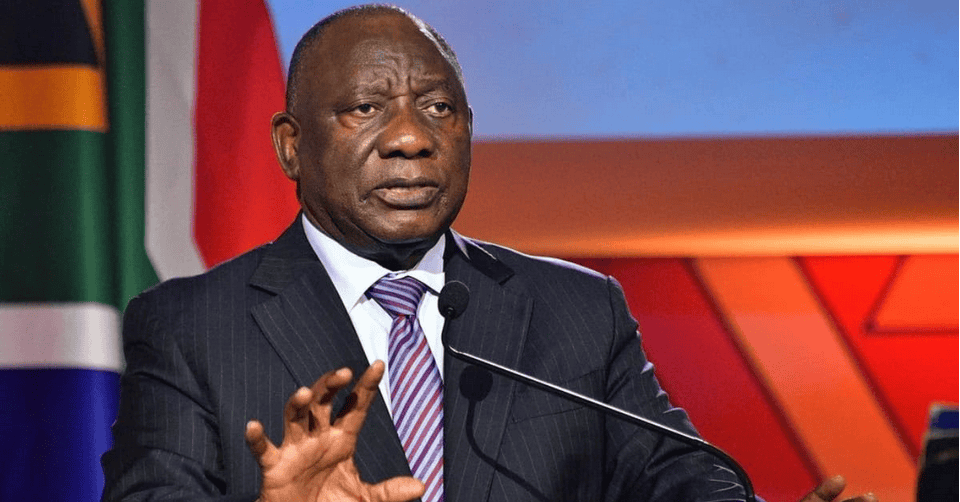
South Africa’s ruling African National Congress has moved an emergency National Executive Committee (NEC) meeting on President Cyril Ramaphosa’s long-running Phala Phala scandal from Tuesday to Wednesday, party sources confirmed Tuesday.
The last-minute shift comes after the Constitutional Court revived impeachment proceedings against the president over the so-called “Farmgate” affair, in which thieves stole large sums of foreign currency allegedly hidden in furniture at his Phala Phala game farm in 2020.
ANC Secretary-General Fikile Mbalula had originally called the special NEC gathering for Tuesday evening to discuss the court ruling and its political fallout. But with tensions rising inside the party and fresh calls for Ramaphosa to step aside, the meeting was postponed 24 hours to allow more consultation.
Ramaphosa has consistently denied wrongdoing, insisting the cash came from legitimate livestock sales. He has pledged to defend himself vigorously and address the nation directly. Yet the scandal has refused to die, dogging his presidency and providing ammunition to both opposition parties and critics within his own movement.
The NEC, the ANC’s highest decision-making body between national conferences, now finds itself at the centre of a familiar dilemma: protect the president or risk being seen to shield him from accountability. Some senior figures, including former Health Minister Dr Nkosazana Dlamini-Zuma, have reportedly called for decisive action.
Opposition parties, particularly the Economic Freedom Fighters and Democratic Alliance, have seized on the court ruling to demand a full parliamentary impeachment inquiry. They argue that the president’s position has become untenable and that the ANC’s reluctance to act undermines constitutional democracy.
The timing could hardly be worse for the ANC. Already weakened by poor performance in the 2024 elections and forced into a Government of National Unity, the party is navigating coalition tensions while battling perceptions of elite impunity.
Political analyst Ralph Mathekga described the scandal’s resurgence as “a slow-burning fuse” for Ramaphosa’s leadership. “The court has reopened the door. The NEC must now decide whether to slam it shut or walk through it,” he said.
Ramaphosa loyalists insist the matter is a distraction from the government’s focus on economic recovery, job creation, and service delivery. Yet even within the ANC, whispers of leadership renewal ahead of the 2027 elective conference have grown louder.
Wednesday’s meeting is expected to be tense and lengthy. Delegates will pore over legal advice, gauge internal sentiment, and weigh the broader implications for party unity and the stability of the Government of National Unity.
For ordinary South Africans struggling with unemployment, load-shedding, and crime, the spectacle of yet another ANC crisis meeting may feel distant. But the outcome will shape not only Ramaphosa’s remaining term but the future trajectory of the liberation movement that has governed since 1994.
As the sun sets on another day of political drama in Pretoria, all eyes turn to Wednesday’s closed-door session. In a party famous for its ability to paper over cracks, the Phala Phala scandal may finally force a moment of truth.