By Salome Achieng’ Delaila, PhD.
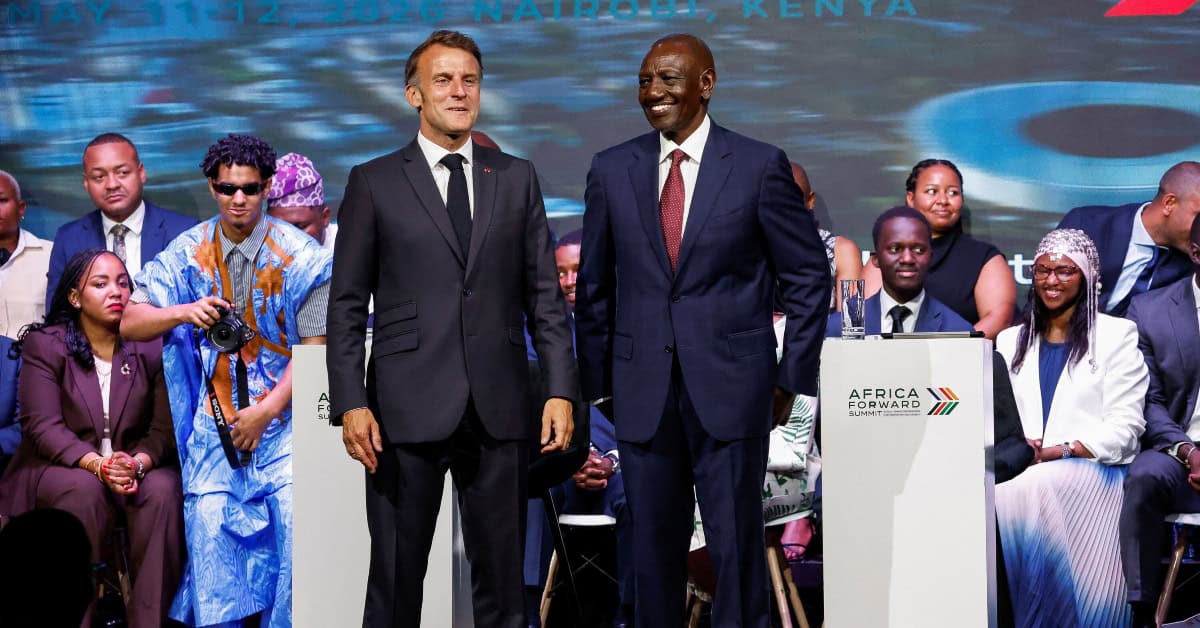
The Africa–France summit in Nairobi, branded the “Africa Forward Summit,” marked a symbolic shift in global diplomacy. For the first time in more than half a century, the gathering moved outside France’s traditional Francophone sphere into East Africa. Yet as the summit closed on May 12, 2026, one question remained: Is this a genuine reset in Africa–France relations, or simply a rebranding of old asymmetries?
France’s decision to host the summit in Nairobi reflects a strategic recalibration. After political ruptures and military withdrawals in the Alliance of Sahel States, Mali, Burkina Faso, and Niger, Paris is seeking new anchors of influence on the continent. Kenya offers what the Sahel currently cannot: relative stability, regional connectivity, and a diversified diplomatic posture.
Unlike the traditional Françafrique model, Kenya does not carry the legacy of French monetary or administrative control. This creates the appearance of a more equal partnership. Yet symbolism alone does not erase power dynamics. President William Ruto captured this tension in his closing remarks when he urged the summit to move “from ambition to execution.”
The summit produced over Ksh 150 billion ($1.1 billion) in investment commitments, positioning Kenya as a gateway for European capital into East Africa. Key agreements included a major port and logistics investment in Mombasa by CMA CGM, modernization of the Nairobi commuter rail, expansion of the Kipeto Wind Power project, and discussions around Kenya’s long-term nuclear energy ambitions.
These projects align with Kenya’s infrastructure goals, but they also raise a familiar concern: debt and dependency under new financial models. Today’s partnerships increasingly rely on Public-Private Partnerships (PPPs), concession agreements, and blended finance structures that can create long-term repayment obligations and operational dependence.
The question for Kenya is not whether investment is necessary, it is under what terms. Are these agreements building sovereign national assets, or creating decades-long external leverage over strategic infrastructure?
Perhaps the most revealing moment of the summit occurred not during the signing ceremonies, but at the University of Nairobi. A widely circulated video showed French President Emmanuel Macron reprimanding sections of a noisy audience during his address, telling attendees to “play the same game” or leave.
To some, it was a minor incident. To others, it exposed the deeper contradiction within France’s renewed Africa strategy. While Paris speaks the language of partnership and co construction, moments of paternalism continue to undermine that message.
This tension now defines France’s challenge across Africa. Following the collapse of Operation Barkhane and growing anti-French sentiment in West Africa, Paris is attempting to rebuild legitimacy through economic diplomacy and strategic partnerships. Kenya, meanwhile, is positioning itself as an active negotiator within an increasingly multipolar world.
The Kenya–France relationship emerging from this summit is neither entirely exploitative nor entirely transformative. It is a hybrid arrangement where influence, investment, and sovereignty are continuously negotiated.
Ultimately, the success of this partnership will not be measured by summit declarations or billion-shilling announcements, but by the transparency of contracts, the sustainability of debt structures, and who ultimately retains control over Kenya’s strategic assets.
The question is no longer whether France is returning to Africa. The real question is what form of engagement African states, and Kenya in particular, are willing to accept, and at what long-term cost to economic and political autonomy?