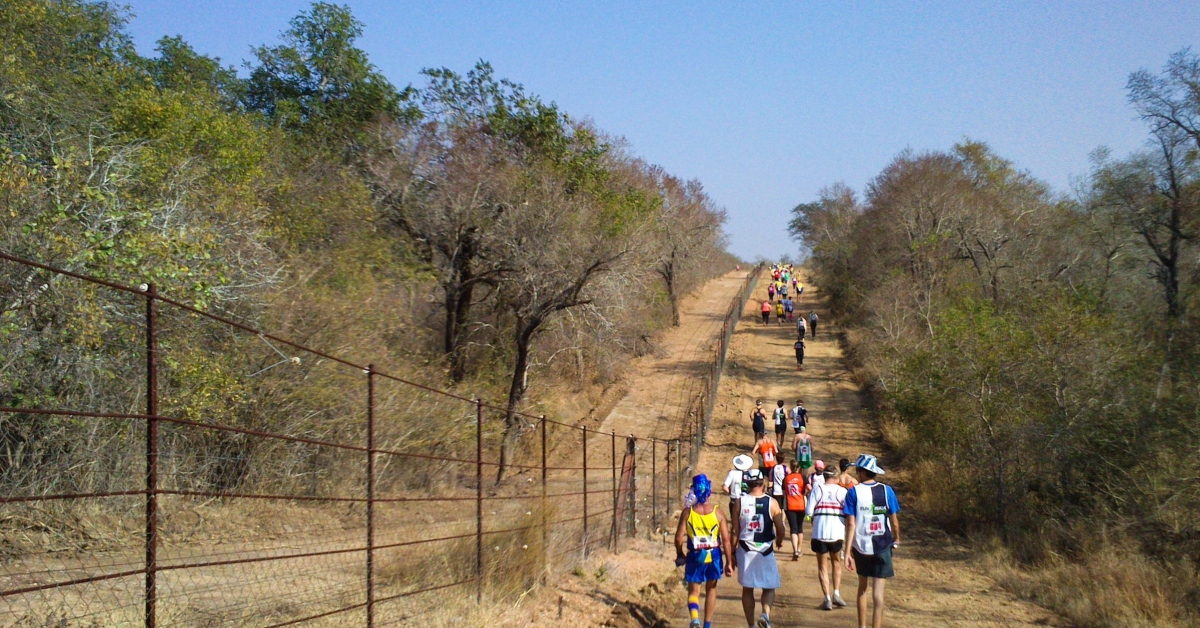
The Skukuza Half Marathon is one of South Africa’s most extraordinary race experiences – and how you frame the weekend around it makes all the difference.
There is a moment, somewhere around kilometre eight of the Skukuza Half Marathon, when the road ahead narrows between a corridor of riverine trees, the air carries the particular dry-grass scent of the lowveld, and a runner realises that this is not like any other race they have entered. There are no city skylines here, no cheering crowds lining suburban pavements, no coffee shops marking the route. There is the bush, the sky, and the sound of your own breathing – and for those who have run it, that moment of pure, unmediated wilderness is the reason they come back year after year.
The Skukuza Half Marathon, run within the boundaries of the Kruger National Park, has quietly earned its place among South Africa’s most beloved and bucket-list-worthy race experiences. It is not the fastest course. It is not the most competitive field. What it is, unambiguously, is one of the most beautiful and singular running environments in the world – a 21-kilometre route through terrain that most people only ever see from the window of a slow-moving game drive vehicle. To run it is to experience the Kruger on entirely different terms: at pace, on foot, in the early morning light, with the distinct and not entirely unwelcome awareness that the bush around you is very much alive.
Why this race deserves a place on your calendar
For South African runners who have ticked the city classics – Two Oceans, Comrades, the Cape Town Marathon – the Skukuza Half Marathon offers something those races, for all their prestige, cannot: genuine remoteness. The starting area sits near the Skukuza rest camp, the largest in the Kruger and one of the park’s oldest, and the route moves through a landscape of mopane woodland, open savanna, and riverine bush that shifts character as the morning light changes. Early starters are rewarded with the particular quiet of a lowveld dawn — temperatures still manageable, the air sharp and clean, the possibility of wildlife sightings a constant and thrilling undercurrent to the race itself.
It is a well-organised event, with enthusiastic support from conservation staff and volunteers who understand that the runners they are cheering on have chosen this race specifically because it is unlike any other. The field is friendly and community-spirited, drawing a loyal base of returning participants alongside first-timers who arrive slightly wide-eyed and leave already planning their return. For runners who value experience over personal bests, and who believe that the best races are the ones that give you a story to tell, this one delivers consistently.
Training for a bush marathon: What you need to know
Running a half marathon in the bushveld requires the same foundational preparation as any 21-kilometre race, but there are a few environment-specific factors worth building into your training plan well in advance.
Heat and humidity are your primary variables
The lowveld runs hot, particularly in the summer months, and even an early morning start can see temperatures climb quickly once the sun is established. If you are training in a cooler climate, introduce deliberate heat acclimatisation sessions into your programme in the four to six weeks before race day – running at the hottest part of the day, adding layers, or using a sauna post-run to simulate the thermal load your body will face on the day.
Train on uneven terrain
The Skukuza course is not a road race in the conventional sense. Expect gravel, dust, subtle cambers, and occasional surface irregularities that will challenge your ankles and your concentration simultaneously. Incorporate trail running sessions into your weekly programme, and invest in a shoe with adequate grip and lateral stability rather than reaching for your fastest road flat.
Respect the distance, especially in this environment
The combination of heat, altitude variation, and the simple cognitive effort of running in an unfamiliar and stimulating environment means that the Skukuza Half Marathon will feel harder than a flat urban 21-kilometre at a comparable pace. Build your long runs conservatively, prioritise time on feet over pace targets in your final training block, and arrive at the start line well-tapered and well-rested.
Hydration begins days before, not hours before
In dry bushveld air, dehydration can creep up on runners before they register thirst. Begin increasing your fluid intake three days out from race day, reduce alcohol consumption in the week before the race, and carry your own hydration if you are particular about your fuelling strategy on the course.
Making the weekend work for the whole family
One of the most underappreciated aspects of the Skukuza Half Marathon is what it offers the people who come with you — because a race weekend in the Kruger is, almost by definition, a family holiday in one of the country’s greatest natural assets.
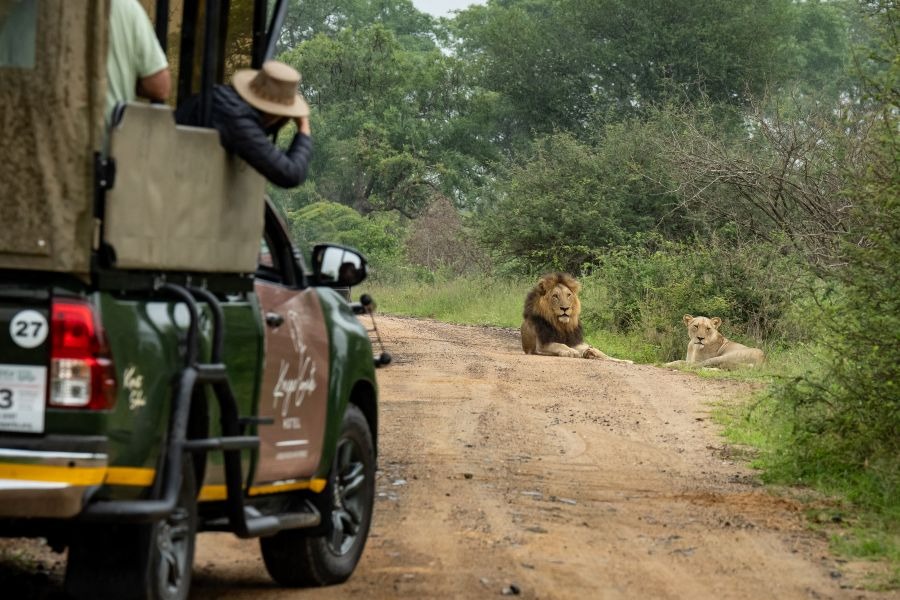
For non-running partners and family members, the challenge of a race weekend is usually the waiting: the early alarm, the quiet hours while the runner is out on course, the slightly deflated afternoon once the finish line euphoria has faded. In the Kruger, that waiting problem simply does not exist. A sunrise game drive covers the hours of the race with the kind of experience that most South Africans consider a once-in-a-lifetime treat. Children old enough to appreciate wildlife will talk about what they saw for weeks. Partners who were mildly sceptical about a running-based holiday tend to become its most enthusiastic advocates by Sunday morning.
The key to making the family weekend work is in the pre-planning. Book game drives and family activities well in advance, particularly if you are travelling during peak season, and structure the schedule around your race commitments rather than treating the running as an afterthought. Brief the family on what you will need on race morning – an early, quiet breakfast, time to prepare your kit, a low-key send-off – and build in a shared celebration for the afternoon: a long lunch, a leisurely game drive, a sundowner at a viewpoint over the bush. The race becomes the anchor of a richer shared experience rather than the reason everyone else had to come along.
Finding the right base for this kind of weekend is essential, as the logistical ease of getting to the start line can dictate your race-day nerves. Many runners find that staying just outside the park gate offers the perfect balance of convenience and elevated comfort. The Kruger Gate Hotel, for instance, sits right on the Sabie River, providing a seamless transition from the race environment to a space where the whole family can actually relax.
While you are navigating the riverine trees on the course, your family can be enjoying the family-friendly swimming pool, spotting hippos from the pool deck, going for a spa treatment, or going on a guided game drive. It turns the logistical mission of a race into a cohesive holiday, where the proximity to the Skukuza rest camp means less time in the car and more time soaking up the atmosphere of the park.
“We see it every year with race weekend guests — the runner checks in focused and a little nervous, and by Sunday afternoon the whole family is already talking about when they are coming back. The race gives the weekend its energy, but it is the Kruger that makes it unforgettable for everyone. We make it our job to take care of the rest,” says Miguel Farinha, General Manager of Kruger Gate Hotel.
Recovery done properly
The hours after a half marathon in the bushveld deserve as much attention as the hours before it. Heat racing accelerates fluid and electrolyte loss, and the combination of physical exertion and sun exposure means that recovery nutrition and rehydration need to begin at the finish line and continue consistently through the afternoon.
Prioritise a proper post-race meal within an hour of finishing – protein and carbohydrates in combination, not just a banana and a recovery drink. If your accommodation includes a spa, a post-race massage in the afternoon is not an indulgence; it is a physiologically sound intervention that will meaningfully shorten the soreness window and leave you mobile and comfortable for the game drive you have booked for the following morning.
Sleep is your most powerful recovery tool, and the lowveld offers it in abundance. The combination of physical tiredness, clean air, and the deep quiet of a wilderness environment produces the kind of restorative sleep that is genuinely difficult to replicate in an urban setting. Let the bush do its work.
The Skukuza Half Marathon entries open seasonally. Check the official race website for current dates, entry categories, and course information.