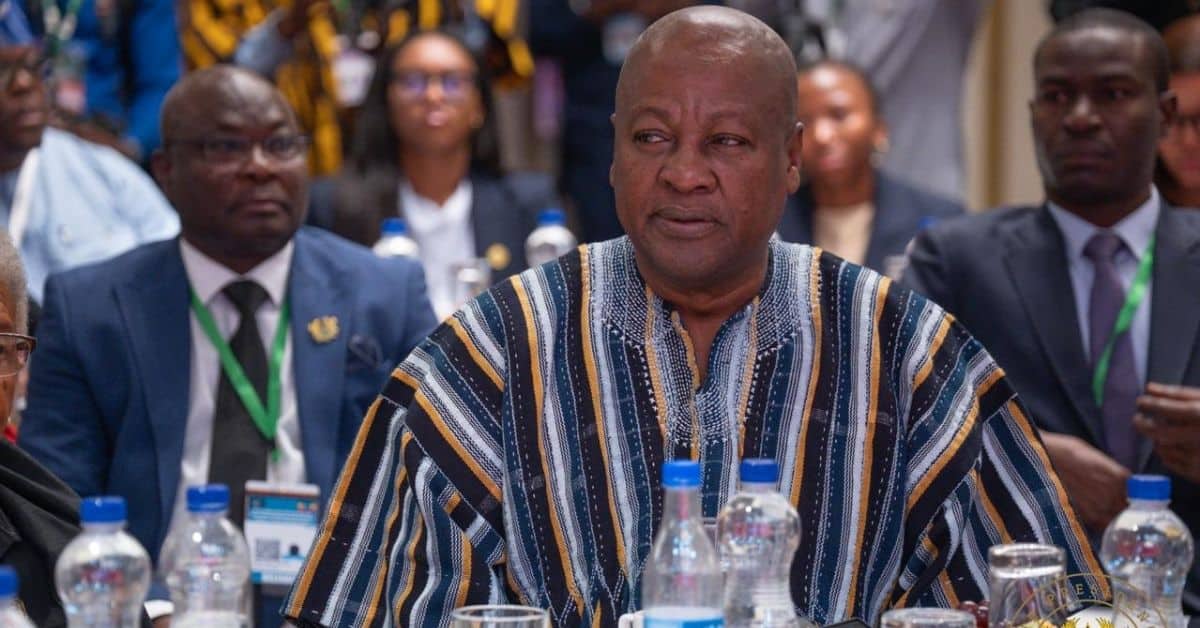
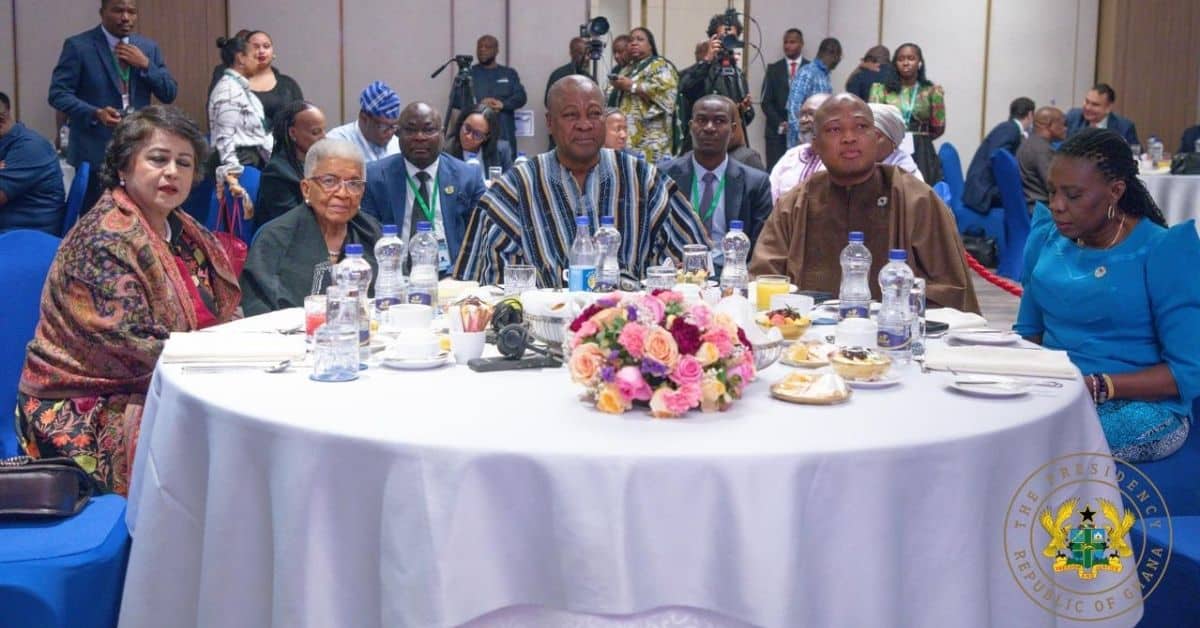
On February 14, 2026, on the margins of the 39th African Union Summit, the “Accra Reset: Addis Reckoning” brought together leaders, policymakers, and experts. Hosted by Ghana’s President John Dramani Mahama with support from the African Union Commission, the event took place at the Skylight Hotel. It focused on shifting from discussion to action on economic and health sovereignty. Themes included ending dependency on external systems, building border-free prosperity, mobilizing capital, and executing reforms in minerals, trade, payments, and talent mobility.
Speakers outlined “sovereign prosperity spheres,” cross-border platforms for policy, finance, production, and infrastructure. The gathering emphasized urgent execution over declarations. Below is a focused look at the main speakers and key segments, based on the event’s proceedings.
President John Dramani Mahama: Leading with Concrete Proposals
“Africa must pull itself by its own bootstraps. This is the Addis reckoning.”
President Mahama opened the main proceedings and set the tone with a keynote that combined vision and practicality. He described the Accra Reset as an architecture to align finance, health, trade, skills, and technology. He rejected slow, consensus-driven approaches that settle for minimal progress. Instead, he called for execution at scale.
Key proposals included a high-level panel on global health reform, a certification program for sovereign negotiators (styled like “Top Gun” training), digital skills passports linked to the AfCFTA, and intelligence systems for critical mineral supply chains. He stressed repatriating sovereign foreign exchange reserves and creating sovereign prosperity spheres.
In closing remarks, he consolidated ideas such as conflict-free mineral certification, strengthened pan-African payment systems, and connectivity reforms. He announced Ghana-specific steps, including raising domestic bonds to buy cocoa (ending foreign collateralization) and a 2030 ban on raw mineral exports. He also supported a UN resolution on the Transatlantic Slave Trade as a crime against humanity.
Amina Gurib-Fakim: Emphasizing Food and Global Positioning
“Africa must reclaim her sovereignty. If we are not going to be invited to the table, we’re going to have to bring our chair.”
Former President of Mauritius Amina Gurib-Fakim offered grounded remarks. She credited the “Circle of Guardians,” including early figures like Olusegun Obasanjo, for laying foundations. She highlighted food sovereignty with the principle “grow what she eats and eat what she grows.” She tied agricultural self-reliance to health and economic control. In a changing global landscape, she urged Africa to claim its place at international tables, even bringing its own chair if not invited.
Representative of President Felix Tshisekedi: DRC’s Mineral Solutions
Speaking for President Felix Tshisekedi of the Democratic Republic of Congo, Industry Minister Jean-Lucien Bussa delivered remarks in French (with interpretation). He positioned DRC as a “nation of solutions” for Africa. He focused on vast reserves of lithium, cobalt, and tantalum. He advocated local content laws, regional integration corridors, technology certification, and transparency to end external exploitation and conflict-linked extraction. He framed DRC’s resources as a shared continental asset for value addition and local benefit.
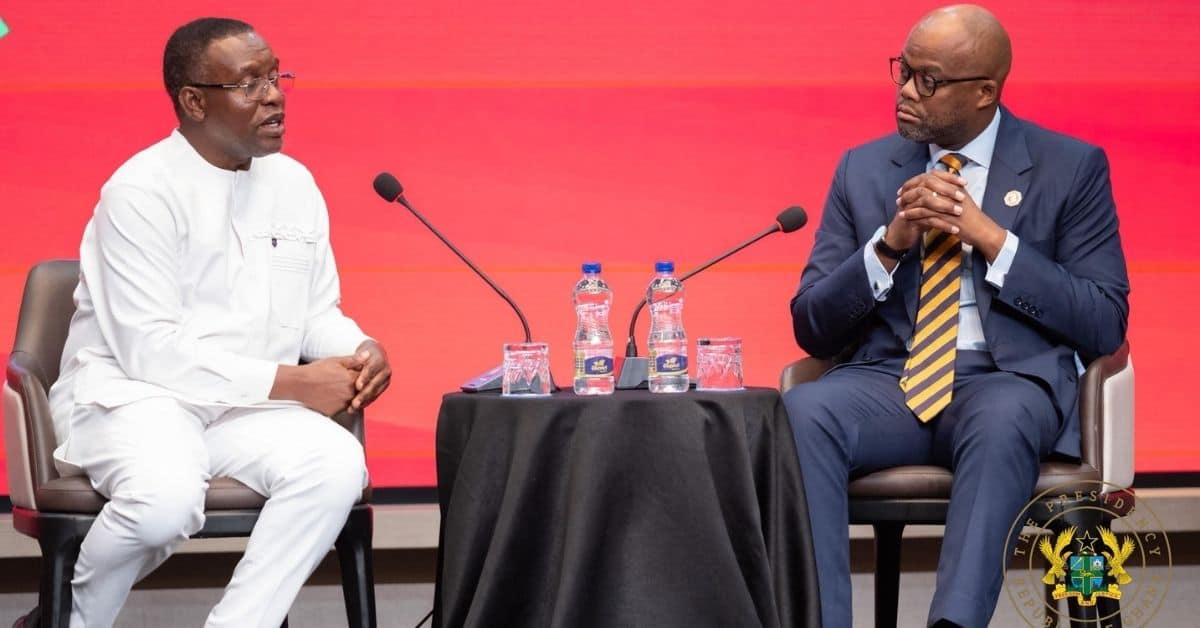
Fireside Chats: Wamkele Mene and Nkosazana Dlamini-Zuma
H.E. Wamkele Mene, Secretary General of the AfCFTA Secretariat, joined a fireside chat. He explained the digital trade protocol as a driver for a projected $712 billion digital economy by 2050. He highlighted tools like local currency payments to reduce conversion costs, an AfCFTA Hub for MSME inclusion, and interoperable systems that preserve sovereignty. He emphasized practical steps such as issuing AfCFTA numbers.
“Eliminate this cost of currency convertibility to ignite small medium enterprises capacity.”
Nkosazana Dlamini-Zuma, former AU Chairperson, delivered a strong call for unity. She noted intra-African trade remains low at about 16 percent. She supported an African passport, structured mobility for SMEs, and pan-African payment systems. She framed unity as essential for survival and prosperity.
“You unite or perish. A borderless Africa so that anyone can move across a continent and anyone can trade.”
Additional Voices in Panels
Panels included contributions from international partners and experts. A UK representative stressed equitable partnerships based on sovereignty. A Spanish delegate viewed Africa’s rise as an opportunity for mutual growth. High-level panel co-chairs discussed South-South cooperation on health production and AI harnessing. Other inputs covered execution urgency, African bonds for resources, and mineral trading mechanisms.
Figures like Ellen Johnson Sirleaf and former AU leaders received nods for ongoing guardianship roles.
From Addis to Implementation
The event closed with the African Union anthem. It reinforced the Accra Reset’s focus on measurable, deliverable change. President Mahama’s synthesis urged coordinated implementation across mineral regimes, payments, and connectivity. Discussions highlighted Ghana’s cocoa bond initiative as a model with potential continental impact.
Challenges remain in a shifting global environment. Yet the convening signaled Africa’s readiness to act on population growth, technology, capital, and geopolitics. As speakers emphasized, sovereignty means execution, not just declaration.
For the full video, view the recording on YouTube under “Accra Reset: ADDIS RECKONING“. Follow developments with #AccraReset.