
Africa’s Path To Gender Economic Parity Has Been Pushed Back By 50 Years, But Digital Entrepreneurship Offers A Way Forward

Women-led startups generate twice the revenue per dollar invested, yet receive less than 1% of venture capital in Africa
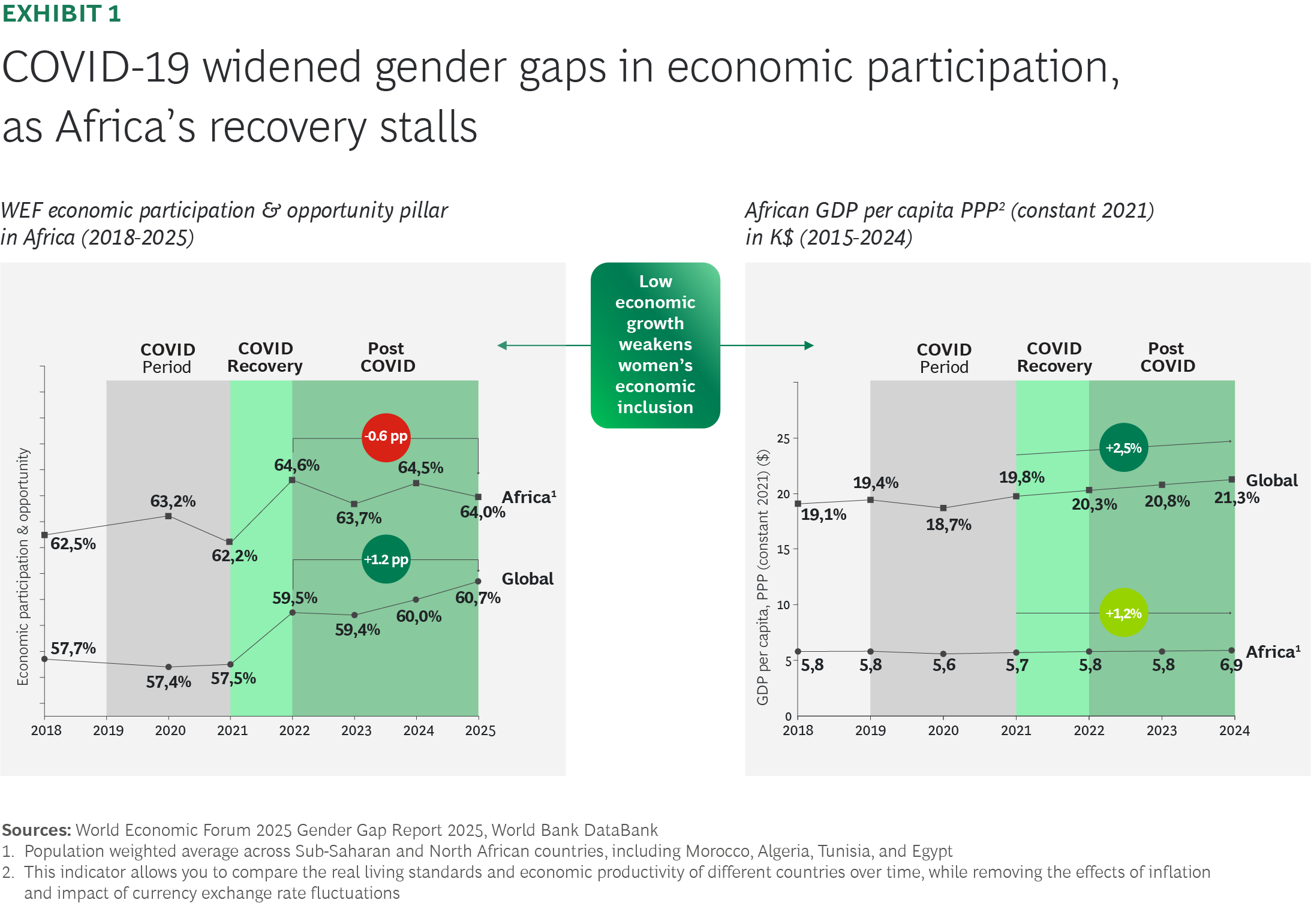
Boston Consulting Group (BCG) has today released a new report, Financing Women’s Digital Entrepreneurship: A Pathway to Closing Africa’s Economic Gender Gap, revealing that women’s economic participation in Africa has fallen 0.6 percentage points below 2022 levels, extending the region’s timeline to reach economic parity from 120 years to approximately 170 years.
The report draws on BCG’s Africa Women’s Voices Survey 2025, which surveyed around 3,000 women and men across six major African economies – South Africa, Nigeria, Ethiopia, Kenya, Morocco and Egypt – alongside data from the WEF Global Gender Gap Report 2025 and Africa’s startup funding landscape.
The Setback in Numbers
Africa’s post-COVID economic recovery has been slow and uneven. Between 2021 and 2024, GDP per capita on the continent grew at just 1.2% annually, less than half the global average of 2.5%. With 70% of women concentrated in vulnerable, informal employment, they have disproportionately borne the brunt of this regression.
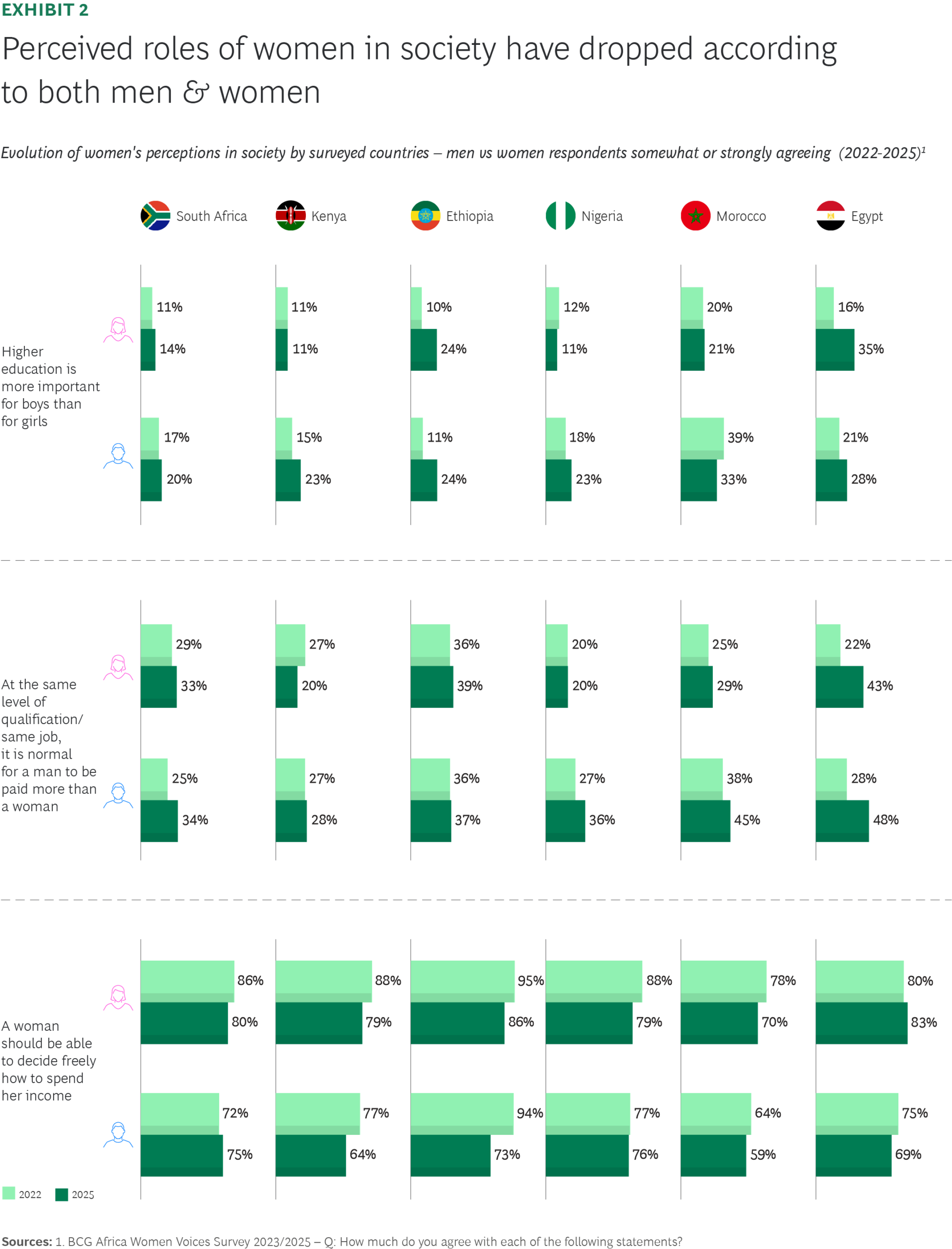
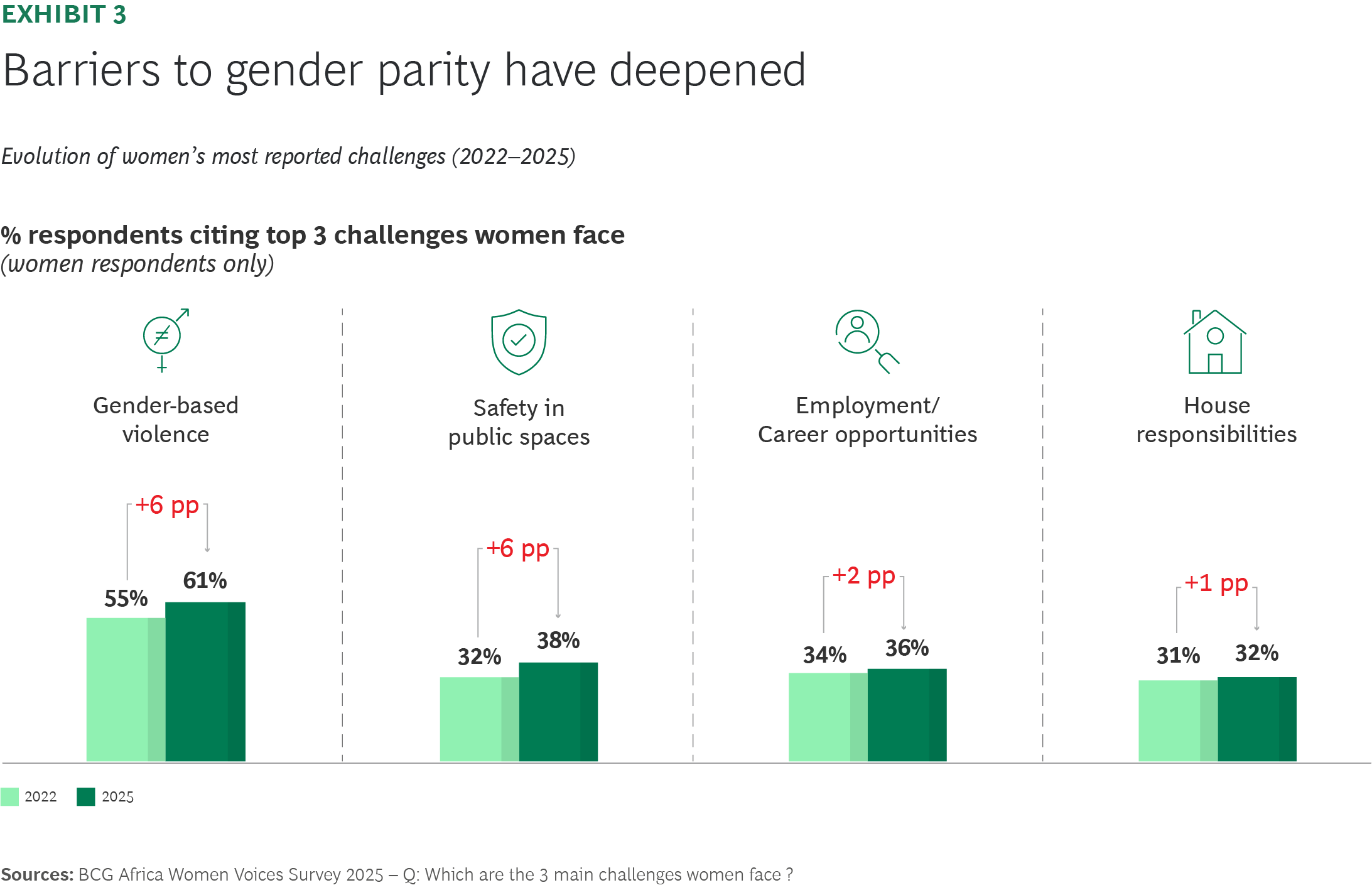
The survey findings paint a troubling picture beyond the economic data. Since 2023, attitudes toward gender equality have deteriorated across the region, and not only among men. Women themselves are now less likely to support equal pay, financial autonomy and equal access to education, pointing to a deepening of internalised discrimination. Concerns about gender-based violence (cited by 61% of women surveyed) and access to economic opportunities (36%) have both intensified.
“What makes this data particularly concerning is that the regression is not limited to structural barriers. When we see women, themselves becoming less likely to advocate for their own economic rights, it signals how deeply these setbacks are being felt at a social level,” said Zineb Sqalli, Managing Director and Partner at BCG and global lead for Gender Equality and Women Empowerment. “The window for intervention is narrowing.”
Digital Entrepreneurship: A Growing Lifeline
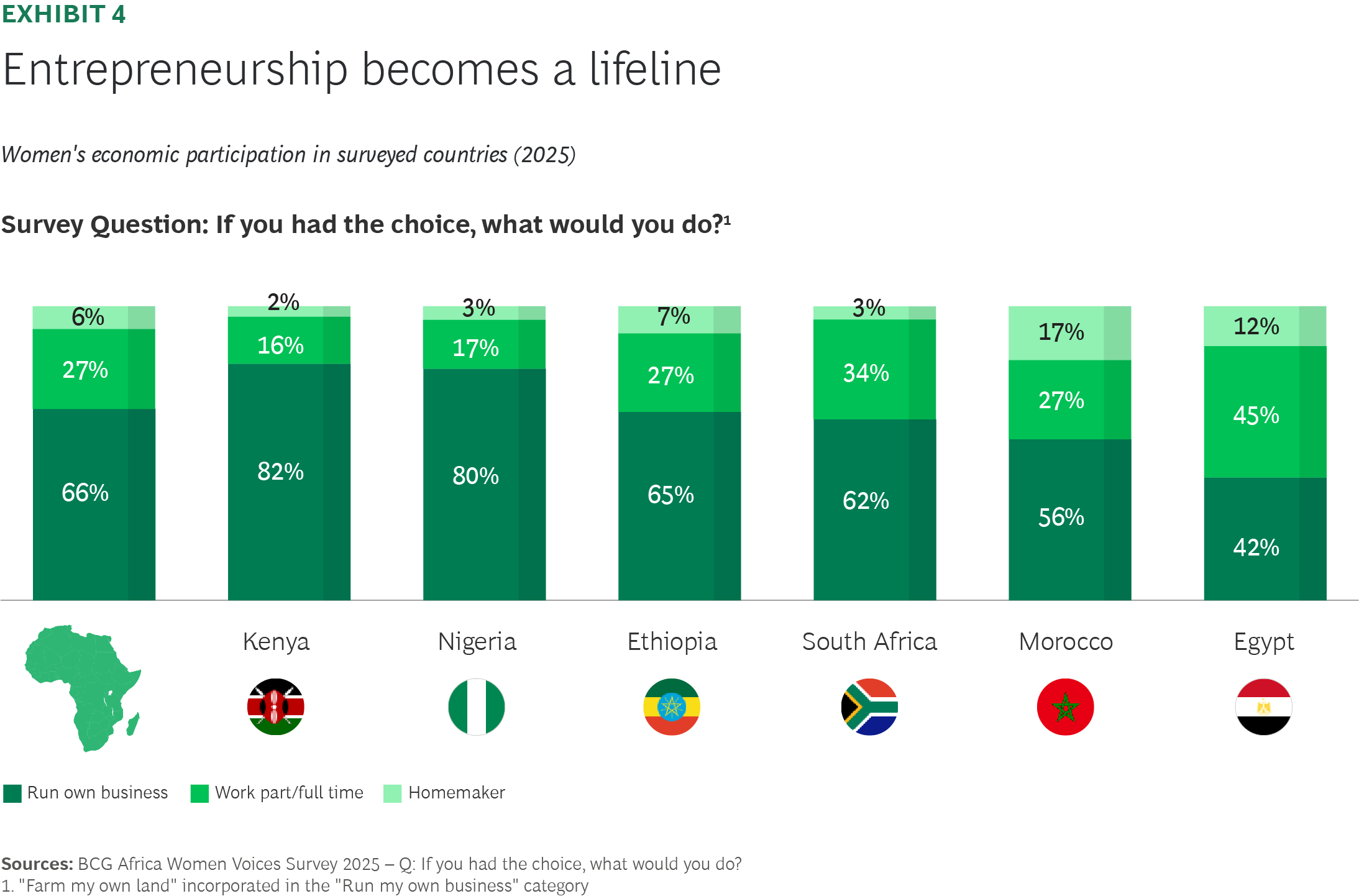
Against this backdrop, digital entrepreneurship is emerging as one of the most practical routes to economic inclusion for African women. According to the BCG survey, 66% of women across the six countries aspire to run their own business, with that figure exceeding 80% in both Nigeria and Kenya. One in five women surveyed already runs an online business, and two-thirds are considering starting one; outpacing men in digital business ambition.
The appeal is practical. Women who run their businesses from home, reduce their exposure to unsafe commutes and workplaces while managing household responsibilities. Digital platforms like Facebook Marketplace and Jumia report that 40 to 50% of their sellers in African countries are women. In Uganda, mobile loans have lifted women entrepreneurs’ profits by 15% and their assets by 11% within just eight months.
The Funding Gap That Holds Women Back
Despite this potential, the financing environment for women-led businesses remains deeply unequal. Women-led startups attracted less than 1% of total venture capital funding in Africa in 2024, resulting in a $2.5 billion funding gap relative to male-founded startups over the past five years. Women do receive approximately 52% of Africa’s grant funding, but an over-reliance on grants limits the development of scalable, investment-ready businesses.
The performance gap makes the funding gap harder to justify. Female-founded ventures generate twice the revenue per dollar invested and achieve 10% higher long-term growth than their male-led counterparts.
The barriers run across the entire investment chain: male-dominated evaluation teams, a perception that women-led startups are “too early” or “too risky,” fund timelines misaligned with how women-led businesses actually grow, and the fact that 46% of women founders do not know which investors to approach.
“Women entrepreneurs in Africa are building businesses that solve real problems in health, education, retail and agriculture – sectors that are deeply connected to community needs. They are outperforming on the metrics that matter. The issue is not the quality of their ventures; it is that the investment ecosystem was not built with them in mind,” said Vishakha Chopra, Project Leader in BCG’s Johannesburg office.
What Needs to Change
The report calls for a shift away from the conventional VC model toward financing approaches better matched to how women-led businesses actually operate. Specific recommendations include offering smaller ticket sizes of $50,000 to $100,000 that align with early-stage dynamics, designing blended financing instruments such as convertible notes and revenue-based financing, and pairing capital with non-financial support including investor networks, financial education and accelerator partnerships.
Development Finance Institutions (DFIs) are identified as critical enablers, with the report urging them to deploy first-loss capital, channel grants toward gender-lens VC funds, and partner with local financial institutions to expand debt access for women entrepreneurs.
The report notes that governments also have a huge role to play. 45% of women surveyed lack regular internet access, mainly due to cost. Addressing connectivity affordability is, the authors argue, as important as addressing the funding gap itself.
To read the full report, use this link.