When conversations about biodiversity arise, they rarely include industrial facilities but rather favour protected areas, wetlands and threatened ecosystems.
According to Dr Jarryd Alexander, Ecologist at Interwaste that needs to change. “Across the world, we are seeing growing pressures on ecosystems, rapid urbanisation and habitat loss, forcing businesses to rethink the role operational spaces play in supporting environmental restoration. Increasingly, biodiversity can no longer be viewed as a separate conservation issue, but as a critical component of long-term environmental sustainability, climate resilience and responsible land management.”
“As we commemorate the International Day for Biological Diversity on 22nd May 2026, it is an opportune time to reflect on that shift and on how even heavily impacted industrial environments can contribute positively to ecological recovery when restoration is approached intentionally.”
Against this backdrop, industrial landscapes deserve closer attention as spaces with untapped potential for ecological recovery.
Reimagining an Industrial Landscape
Prioritising ecological recovery in industrial landscapes should not be underestimated.
According to data, there are over 96,957 industrial, manufacturing and resource locations across 18 regions and 62 districts in South Africa that offer the opportunity for biodiversity recovery, with the highest number in Gauteng (39660 locations) and the City of Johannesburg (14743 locations).
In addition to its high number of industrial landscapes, the population in Gauteng is expected to reach around 16,130,449 in 2026 – making it a great use case of using small patches of indigenous habitats for biodiversity recovery, even in the most unexpected landscapes.
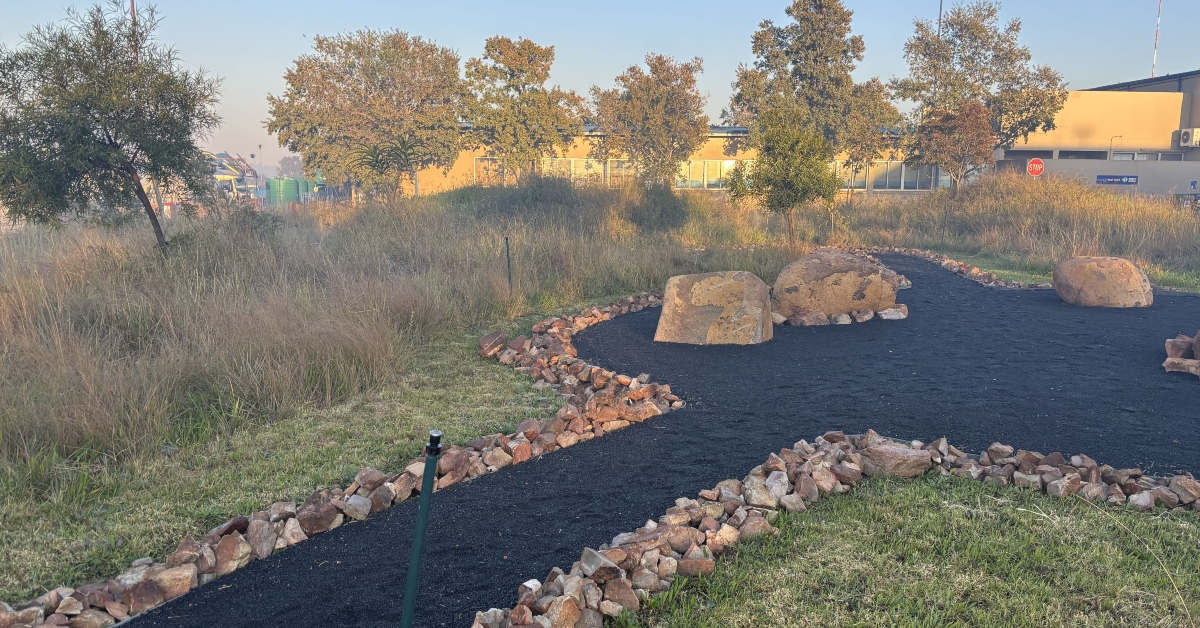
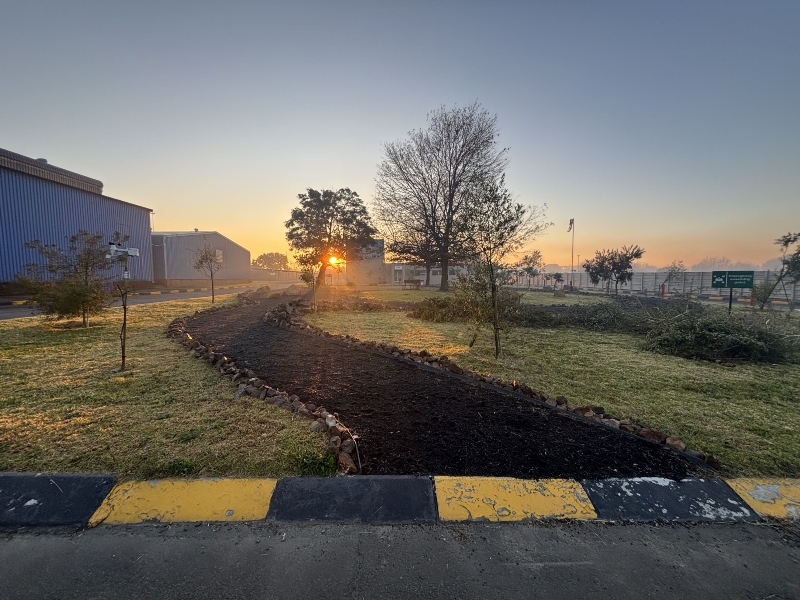
One example comes from an industrial facility in Germiston, where Interwaste’s portion of land has been transformed through infrastructure development, landscaping and conventional lawn maintenance. “In 2022, work began to rehabilitate part of the site into a dedicated Biodiversity Enhancement Zone designed to emulate a natural Highveld grassland ecosystem using indigenous vegetation and ecological restoration principles,” says Alexander.
“The intention was not simply aesthetic landscaping. The project was developed to encourage the gradual return of ecological function, improve habitat availability and create a more biodiverse environment within an otherwise transformed industrial setting.
Two years later, the results are becoming increasingly visible. The area is now largely self-sustaining, with indigenous trees and groundcover thriving. Natural succession has led to the establishment of native shrubs, grasses and wildflowers, enhancing the site’s ecological structure and diversity. Ongoing monitoring highlights steady biodiversity recovery. Bird species diversity has grown from 22 to 56, bat hotels are fully occupied, and a wider variety of insects are being recorded. Independent assessments confirm a continued increase in indigenous flora and fauna, demonstrating the emergence of a resilient, functioning grassland ecosystem despite the site’s industrial surroundings,” adds Alexander.
Why Biodiversity Matters in Industrial Environments
Biodiversity plays a far broader role than many people realise.
Healthy ecosystems contribute toward stormwater management, pollination, soil stability, carbon storage and natural pest regulation. They also improve ecological resilience, helping environments better withstand pressures associated with climate variability, invasive species and environmental degradation.
Within urban and industrial environments, particularly, biodiversity restoration can help counteract the ecological fragmentation caused by development.
“While industrial sites may never replicate fully natural ecosystems, introducing indigenous vegetation and habitat features can still create important ecological stepping stones for species moving through heavily transformed landscapes,” stresses Alaxander.
“Importantly, biodiversity restoration in operational environments also delivers practical benefits. Indigenous vegetation improves habitat availability while contributing toward stormwater management and ecological connectivity within the site – reinforcing an important principle within modern environmental management: sustainability is not only about minimising impact, but increasingly about restoring ecological value wherever possible.”

Managing Ecological Change Realistically
An important aspect of ecological restoration is also recognising that natural systems evolve dynamically over time.
“This has been true at the Germiston Biodiversity Enhancement Zone, invasive species control has relied on manual management rather than blanket chemical use, recognising that ecological change is part of recovery rather than a sign of failure. This kind of realism is essential if biodiversity initiatives are to succeed outside traditional conservation spaces.
Rather than relying exclusively on herbicide application, the site has incorporated ongoing manual invasive species management and monitoring practices aimed at maintaining ecological balance while supporting longer-term habitat development,” says Alexander.
Biodiversity as Part of the Sustainability Conversation
Globally, biodiversity is becoming an increasingly important component of environmental, social and governance (ESG) strategies and sustainability reporting frameworks.
Businesses are under growing pressure not only to reduce environmental harm, but to actively contribute toward ecological resilience and restoration.
Importantly, these efforts shift the conversation around what environmental responsibility can look like within operational environments.
“The International Day for Biological Diversity serves as a reminder that ecological restoration is not solely the responsibility of conservation organisations or governments. Long-term biodiversity resilience will increasingly depend on collaborative efforts across industries, sectors and landscapes. Sometimes, meaningful ecological recovery begins with simply creating space for nature to return,” concludes Alexander.