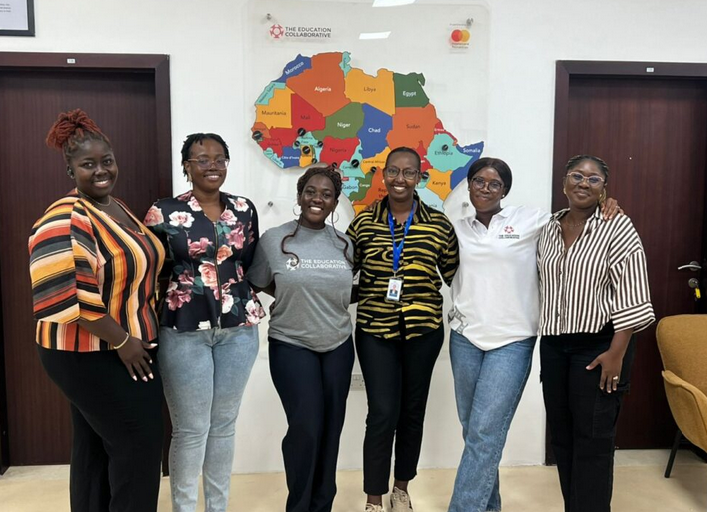
The idea of understudying the career services model at Ashesi University was first proposed by Karoli Kolokonyi, Director of Careers and Alumni Affairs at Kepler College. Facilitated through The Education Collaborative and coordinated by Dr. George Mugabe, Director of the Collaborative’s East Africa Hub, the visit became another strong example of cross-institutional learning among African universities.
As Kepler College continues to grow its student population, its career services team has been searching for new ways to scale support systems without compromising quality. The institution was particularly interested in how Ashesi integrates technology and peer-led support into its career development ecosystem – an area where Ashesi has become increasingly recognized among African universities.
Mable Mirembe, Career Guidance Manager at Kepler College, anticipated gaining both inspiration and practical insights from the visit.
“We want to learn from them,” she explained during the visit. “They are more advanced in tech.”
Over several days, Mable shadowed members of Ashesi’s Careers and Alumni Affairs team, engaging deeply with the systems, platforms, and processes that support student career development at the university. The visit focused specifically on understanding Ashesi’s use of technology, its Career Peer Advising model, internship tracking systems, and approaches to scaling student support.
According to Abigail Welbeck, Director of Careers and Alumni Affairs at Ashesi, the engagement was intentionally designed around Kepler’s priorities.
They mentioned four key areas,” Abigail explains. “Technological integration, platforms and tools for career guidance and tracking, and then the career peer advising module – how we train students to support the department and how the whole system is coordinated.
One of the strongest impressions for the Kepler team was Ashesi’s use of career technology platforms to improve efficiency and student outcomes. Mirembe was introduced to tools such as CareerOS, a centralized platform that helps connect students, alumni, and employers while also enabling career tracking and resume development.
It brings alumni, students, and employers together,” she notes. “They can track students from first year, know who is ready for internships, where students are working, and it also helps with CV writing and editing and provides visibility into both student and employer engagement, helping staff quickly identify students seeking opportunities and those who have already secured them.”
She observed that the system significantly reduces the workload on staff by minimizing the need for repeated one-on-one resume coaching sessions – a particularly important consideration for institutions experiencing rapid enrollment growth.
For Mirembe, the platform demonstrated how technology could help Kepler College scale its career services by improving data tracking, deepening employer engagement, strengthening accountability, and freeing staff to focus on higher-impact interventions.
The visit also highlighted Ashesi’s Career Peer Advising programme, where trained students serve as an extension of the career services office by supporting their peers with career coaching, resume reviews, and career fair preparation.
“They have a Career Peer program of 22 students acting as an extension of career services,” Mable says. “They help fellow students with coaching and CV editing. I thought the CV clinic idea was especially interesting.”
At Ashesi, Career Peer Advisors are deeply integrated into the department’s operations. They assist with student outreach, event coordination, feedback collection, and even logistics for career fairs. For Kepler, the model offered a practical example of how peer-led systems can expand access to career support while preserving quality and consistency. They are the “eyes, ears, and voice” of the Career Services Office within the student community.
Abigail emphasized that the Ashesi team intentionally walked Kepler through every stage of the program’s development.
“We took her through everything – how we recruit Career Peer Advisors, how we train them, what we expect them to do, and how we track their work,” she explained.
Another area that stood out was Ashesi’s use of Focus 2 Career, a platform designed to guide students through self-discovery and career exploration. The tool helps students identify their interests, values, strengths, and personality preferences while exploring career pathways aligned with their profiles. Mable highlighted the platform’s ability to encourage students to take ownership of their career development while providing measurable indicators of progress.
She also explored Ashesi’s use of Big Interview, a platform that allows students to practice interview responses independently, review their performance, and receive structured feedback. The system reduces reliance on staff-led mock interviews while ensuring students have continuous access to interview preparation resources. The platform demonstrated how technology can support more efficient career services by improving student tracking, strengthening employer engagement, enhancing reporting capabilities, and reducing administrative workload, Mirembe noted.
The engagement also extended beyond career services. Mirembe interacted with Ashesi’s alumni relations office, internship coordinators, and members of The Education Collaborative team, gaining broader insight into how institutional partnerships can strengthen employability ecosystems across Africa.
George explained that a key objective of The Education Collaborative is to intentionally connect institutions and create opportunities for them to learn directly from one another. The broader goal is to foster relationships through which universities can continue collaborating independently around shared challenges and opportunities in higher education.
At Ashesi, these partnerships are closely aligned with the university’s broader mission of contributing to Africa’s transformation through higher education. “Ashesi is a small university,” Abigail said. “So, this is how we do the transformation. We may not be able to transform Rwanda directly, but we can support institutions like Kepler to transform students coming through Rwanda.
She added that such collaborations create “different hubs of excellence in higher education” across the continent, where institutions both teach and learn from one another.
The visit concluded with several recommendations for Kepler College, including piloting a Career Peer Programme, expanding peer-led CV clinics, and exploring the adoption of career management platforms that can improve student tracking, employer engagement, and employment reporting. These recommendations are expected to inform future discussions about scaling career support services as the institution continues to grow.
The ultimate goal is not replication, but adaptation – building career support systems that are scalable, efficient, and responsive to student needs within Kepler’s unique context.
As African universities continue to confront rising enrollment, evolving labour markets, and increasing pressure to improve graduate outcomes, partnerships such as this demonstrate the value of peer learning and collaboration in strengthening higher education across the continent.

This article was originally published by The Education Collaborative and is republished here with permission.
The Education Collaborative is a pan-African network advancing higher education through collaborative research, practice-driven programs, and shared accountability among universities and education leaders, with a focus on strengthening graduate outcomes and long-term institutional impact.