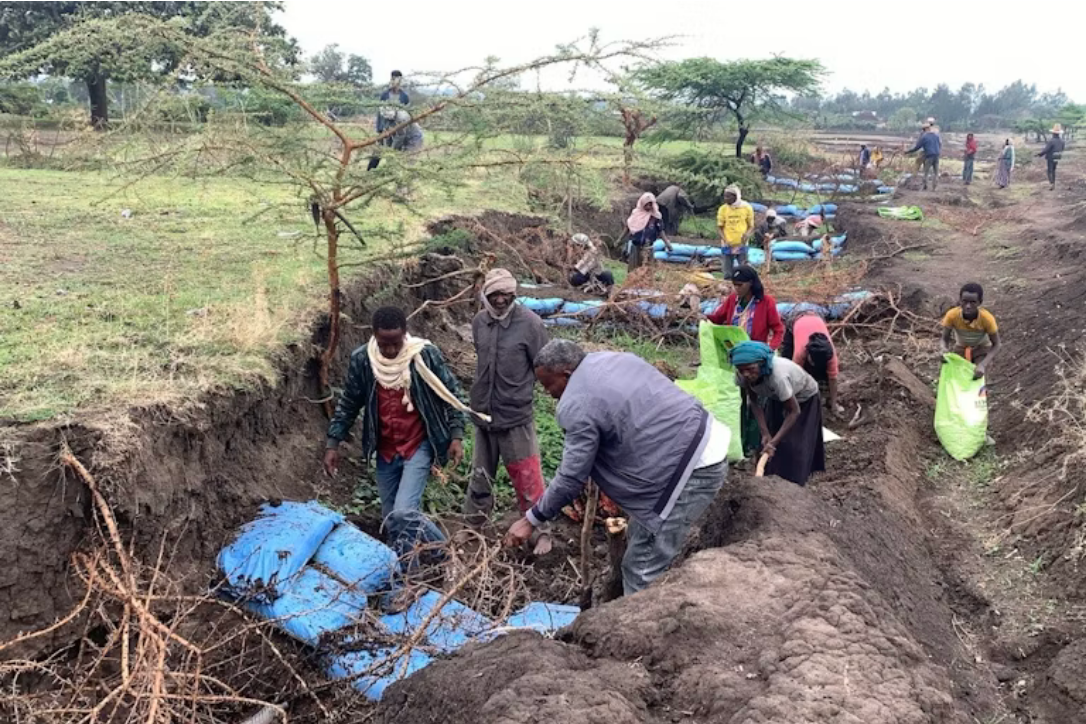
Nearly a quarter of Ethiopia’s land has been degraded through deforestation, overuse, and climate-related erosion, but new research shows that low-cost, community-driven restoration techniques can meaningfully reverse the damage. Two approaches have proven particularly effective: fencing off degraded areas to allow natural regeneration, and rehabilitating deep gullies using locally sourced stones, soil, check dams, and vegetation. The fenced areas, known as exclosures, restored vegetation cover within approximately five years and improved soil moisture, biodiversity, and carbon storage. On the other hand, gully rehabilitation cost between $600 and $800 per hectare using basic tools and local labor, with no need for heavy machinery. Researchers say local ownership is critical to long-term success, helping farmers reduce soil erosion, improve water availability, and access resources such as fodder, honey, and indigenous plants.
The Conversation