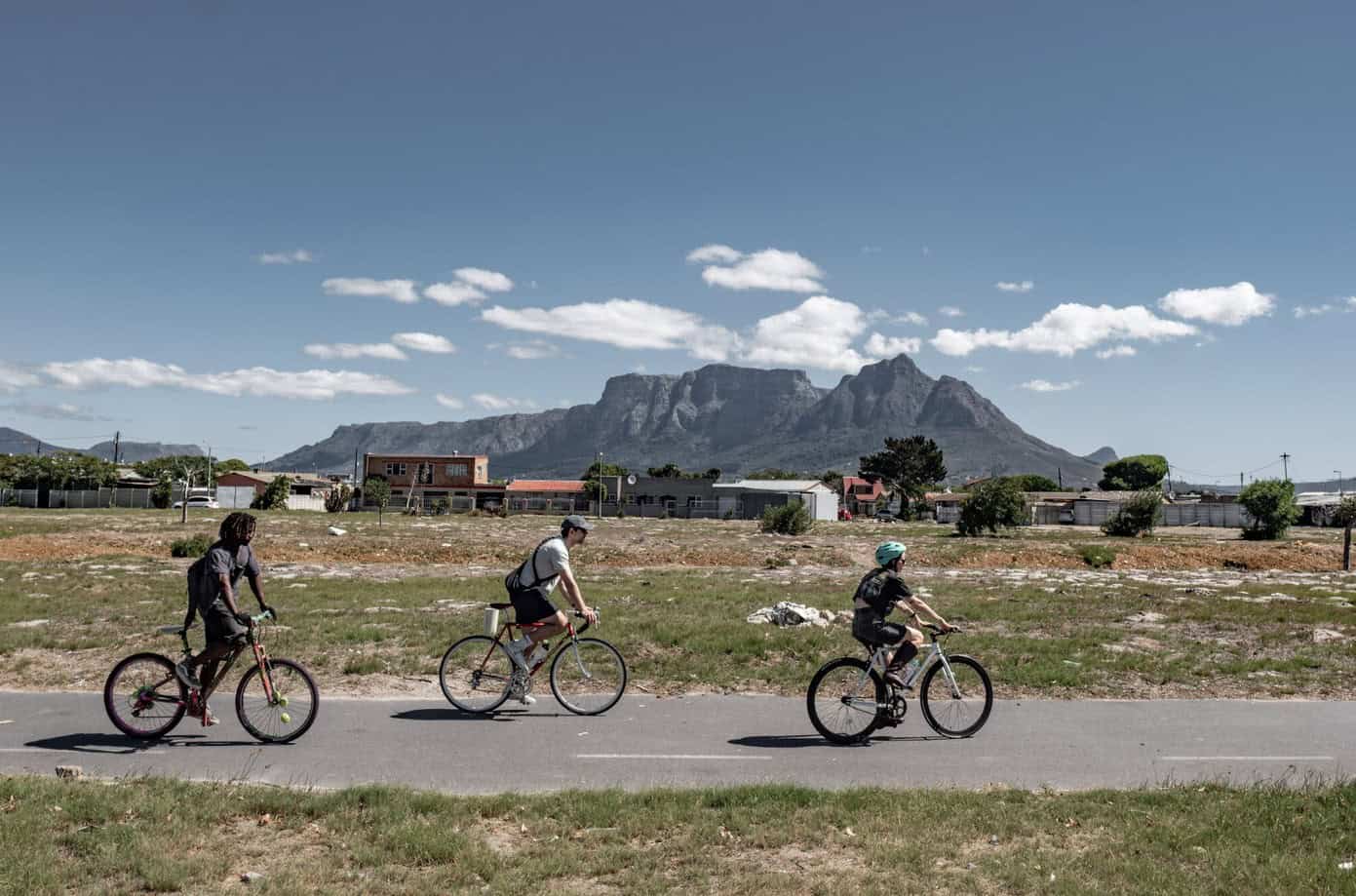
A 10-mile bike ride from downtown Cape Town to the township of Langa reveals how thoroughly apartheid’s physical infrastructure continues to shape—and divide—South African life three decades after the system’s collapse. Organized by the nonprofit Young Urbanists, the ride traced the buffer zones and grand thoroughfares originally designed to segregate Black and colored residents from the city’s affluent core. While the ride started on vibrant, well-equipped streets, it ended in areas where infrastructure remains decrepit and hostile to pedestrians. A stark example of this “spatial apartheid” was revealed at the finish line: a school in the neighboring suburb of Pinelands is physically only half a mile from Langa, but due to highways, barbed-wire walls, and railway tracks, the actual travel distance is six miles. Yet signs of change are emerging—new bridges, pedestrian piazzas, and bold urban interventions are slowly dismantling both the physical barriers and the psychological ones, challenging the car-first, race-coded mentality that apartheid baked into Cape Town’s streets and mindsets.
The New York Times