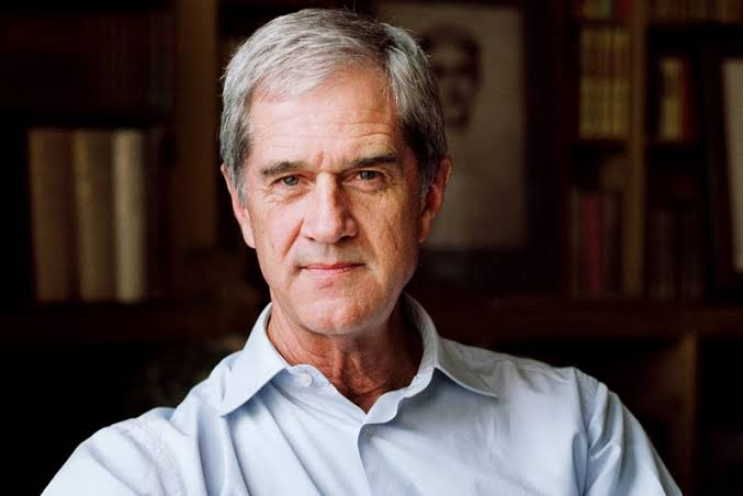
Roelf Meyer remembers what it felt like to walk into a room where the other side did not trust you. In the early 1990s, he was the face of a crumbling government — a white Afrikaner minister sent to negotiate the end of the system his own party had built. His counterpart was Cyril Ramaphosa, then a sharp-eyed union leader with the African National Congress. The talks were bruising, the stakes existential, and the trust between them had to be constructed from nothing. They managed it. South Africa had its first democratic elections in 1994.
Now, more than three decades later, Ramaphosa — this time as President — has reached back into that history. He has asked the 78-year-old Meyer to do it again: to walk into another room where trust has collapsed and rebuild something workable. The room this time is Washington, D.C. The adversary, in diplomatic terms, is the administration of Donald Trump.
A Year Without an Ambassador
South Africa has had no diplomatic representation in Washington since March 2025, when Trump expelled Ambassador Ebrahim Rasool after Secretary of State Marco Rubio accused him, in a social media post, of being a ‘race-baiting politician’ who hated America and its president. The expulsion — an extraordinary rupture between two countries that share deep historical and commercial ties — left Pretoria diplomatically blind in its most important Western capital for over a year.
The relationship had already been deteriorating. Trump issued an executive order freezing U.S. assistance to South Africa over Pretoria’s International Court of Justice case against Israel’s actions in Gaza. He launched a refugee programme for white South Africans, claiming — without evidence — that they faced government persecution.
Elon Musk, a South Africa-born tech billionaire close to Trump, publicly compared South Africa’s Black Economic Empowerment policies to apartheid, a claim Pretoria rejected with fury. South Africa’s own decision to exclude itself from the Western consensus on Russia’s invasion of Ukraine added another layer of friction. The diplomatic account, in other words, was deeply overdrawn.
A Strategic Gamble
Meyer’s appointment, confirmed by Presidency spokesperson Vincent Magwenya to the BBC and widely reported in South African media, is being read in Pretoria as a calculated bet. The stakes are real and immediate: South Africa’s inclusion in the African Growth and Opportunity Act (AGOA), the U.S. trade programme that provides preferential access to American markets for eligible African nations, has faced growing uncertainty. A full rupture with Washington would devastate key sectors of the South African economy.
Meyer is Afrikaner — the same ethnic group Trump has cast as victims of oppression. He served under apartheid-era presidents P.W. Botha and F.W. de Klerk before becoming the National Party’s chief negotiator in 1993. He later joined the ANC in 2006, and his working chemistry with Ramaphosa is one of the most quietly storied partnerships in South African political history. The hope in Pretoria is that his background — a white Afrikaner who helped dismantle apartheid, who bridged what seemed unbridgeable — will resonate in ways a career diplomat simply cannot.
History as a Credential
Meyer is expected to take up his post in early May 2026. He arrives in a capital where South Africa’s image has been systematically damaged: by the Gaza case, by land reform debates, by Trump’s white-refugee narrative that has gained disproportionate traction in conservative American media. He will need to re-explain, to an audience that has largely made up its mind, a country that is complex, contradictory, and easy to caricature.
Those who know him say this is precisely the work he was built for. He spent the last years of apartheid arguing the indefensible position from the inside, understanding its cruelty better than its defenders admitted, and steering his own party toward the exit while maintaining enough trust to keep the other side at the table. That is a particular kind of political intelligence — not just patience, but the ability to make an adversary feel heard long enough to move.
Whether Washington will extend the same patience to Pretoria remains the open question — and Roelf Meyer has spent a lifetime turning open questions into agreements.