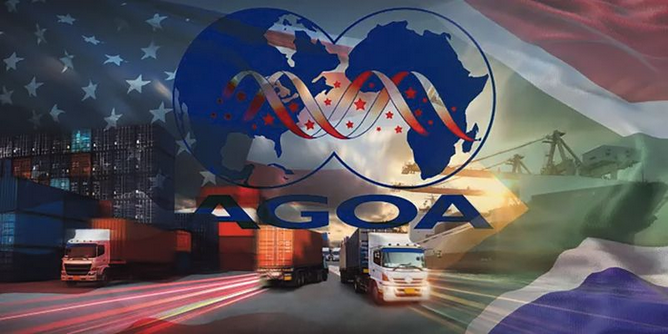
In a move that sent cheers echoing from Addis Ababa textile factories to Lesotho garment plants, President Trump has signed the extension of the African Growth and Opportunity Act (AGOA), securing duty-free access to the world’s largest consumer market for another decade.
The announcement, made during a high-profile Rose Garden ceremony, comes as a massive relief to African economies that collectively export over $2 billion worth of goods annually under the program. Apparel, agriculture, and light manufacturing – the sectors that employ millions of young women and rural workers – are the biggest winners.
Kenya’s cut-flower industry, Ethiopia’s leather goods, and South Africa’s auto components are already seeing order books swell. “This is not charity,” Trump told reporters. “It’s smart business. African nations deliver quality, and American consumers get great products at fair prices.”
For African exporters, the relief is palpable. The previous uncertainty around AGOA’s expiry had frozen investments and delayed factory expansions. Now, with clarity through 2036, capital is flowing back in. A Nairobi-based apparel exporter told me yesterday: “We just signed a three-year contract with Walmart. That means 2,000 new jobs in the next 18 months.”
The timing could not be better. With global supply chains still recovering from past disruptions, Africa’s competitive labor costs and improving infrastructure make it an attractive alternative to Asia. Ethiopia alone has added 45 new factories under AGOA in the past two years.
Economists at the World Bank estimate the extension could boost African GDP by up to 0.4 percent annually and create 300,000 new jobs continent-wide. Remittances, foreign direct investment, and technology transfer are expected to follow.
Of course, the deal isn’t without strings. Countries must maintain progress on governance, labor rights, and anti-corruption – conditions that have spurred healthy policy debates in several capitals. Yet most leaders view it as a fair trade-off for market access.
From a Kenyan rose farm to a Ghanaian cashew processor, the mood is optimistic. One factory owner in Mombasa summed it up best: “Yesterday we were worried about survival. Today we’re planning for expansion. That’s what AGOA does – it turns potential into paychecks.”
The extension isn’t just policy. It’s proof that strategic partnership between the United States and Africa can deliver real, tangible wins for both sides. African entrepreneurs are ready. The factories are humming. The future just got a lot brighter.