Cameroon’s capital, Yaoundé, intensified preparations on Tuesday ahead of Pope Leo XIV’s visit, with banners, decorations, and heightened security visible across the city—highlighting Africa’s rising significance within the Catholic Church.
This story is written and edited by Global South World
Posters featuring the pontiff alongside President Paul Biya appeared on government buildings, roundabouts, and churches as authorities geared up for the high-profile event.
The visit comes as Africa’s influence in global Catholicism continues to grow, fueled by a young and rapidly expanding population. Devout Catholic Ngong Aloysius Kfutua noted that the continent’s demographic momentum is increasingly shaping the Church’s future.
“The population of Africa is young. It’s a growing population, while in Europe it is aging,” he said, adding that the increase is reflected in rising church membership.
Kfutua also pointed to reforms such as the 1995 Ecclesia in Africa, which encouraged worship in local languages and the use of indigenous instruments, making the faith more accessible across the continent.
“The faith of Africans is well-tuned. Africans believe so much in God,” he said, noting that the number of priests ordained in Africa continues to outpace Europe.
Church leaders say the visit carries both spiritual and symbolic significance. James Ndifon, Secretary General of the National Episcopal Conference of Cameroon, described it as an opportunity to strengthen unity and reaffirm the country’s place within a fast-growing African Church.
“In many ways, the visit of the Holy Father is going to touch Cameroon in a very precise way because Cameroon is a country in need,” he said. “He’s coming to teach us, to sanctify us and to lead us to God.”
Particular attention is expected to focus on Cameroon’s conflict-affected English-speaking regions, where unrest has persisted since 2016. The Pope is scheduled to visit Bamenda, where he will meet community leaders and celebrate Mass as part of a peace-focused programme.
“He will come to console them, to give them hope and to engage all parties, including civil society and the state,” Ndifon said.
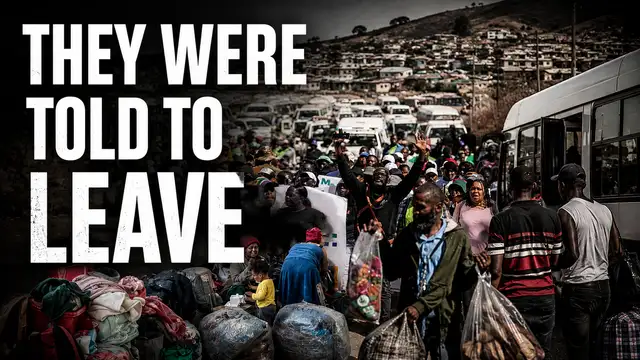
Ahead of the visit, Ambazonian separatist groups have reportedly announced a three-day ceasefire in the northwest and southwest regions, a rare pause in a conflict that has caused widespread displacement and humanitarian challenges.

This article was originally published by Global South World and is republished here with permission. View the original article.
Global South World was created to address the emergence of influential nations outside traditional power structures in geopolitics. Our mission is to amplify voices from the Global South and raise awareness of changes and trends in those countries.