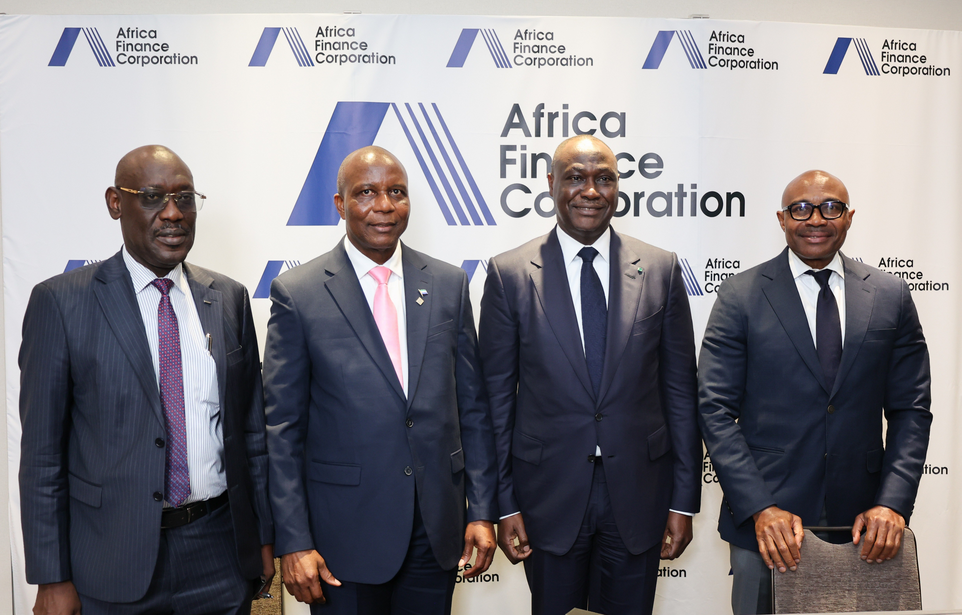
In a move that sent shockwaves of optimism through Africa’s startup ecosystem, the Africa Finance Corporation (AFC) has just approved a landmark commitment of up to US$100 million to back Africa-focused technology fund managers. Announced on May 18 in London, this isn’t just another cheque – it’s a deliberate, powerful signal that African institutional capital is finally stepping up to own the continent’s digital future.
AFC, the pan-African development finance powerhouse with over $19 billion in total assets, is putting its money where its mission is: accelerating digital industrialisation by catalysing local venture capital. The Corporation will deploy this catalytic capital into leading Africa-focused tech funds, with a clear priority on African-owned managers who understand the nuances of building scalable businesses on the continent.
As part of the first wave, AFC has already made anchor commitments to two standout players: $25 million to Lightrock Africa Fund II and $15 million to Future Africa Fund III. These initial deployments position the institution across the entire innovation lifecycle – from early-stage venture capital right through to growth-stage scaling.
The remaining $60 million is already under active review for additional high-impact fund managers. “That is the investment signal,” reads the official AFC statement, capturing the excitement perfectly. “AFC’s US$100 million Africa-focused Technology Fund will accelerate the convergence of growing demand, rapid technology adoption, youthful demographics and the enabling infrastructure we are building.”
The timing could not be more strategic. African venture capital has faced a brutal funding winter, with total deal value dropping sharply in recent years as international LPs pulled back. Many homegrown fund managers struggled to close new vehicles without reliable local anchors. AFC’s move directly addresses that gap, injecting credible, patient African capital and encouraging co-investments that could multiply the impact to $300–500 million or more.
For Africa’s tech entrepreneurs, this is game-changing. Startups in fintech, agritech, healthtech, logistics, and climate solutions – the sectors driving real economic transformation – will now have easier access to growth capital from funds that truly “get” the market. No more pitching to distant decision-makers who view Africa as high-risk; instead, capital from an institution that has financed everything from ports and power plants to broadband infrastructure.
Begna Gebreyes, AFC’s Head of Heavy Industries, Telecoms and Technology, has been crystal clear about the vision: this is about domesticating funding for the digital economy and increasing the share of African institutional capital in the VC ecosystem. With Africa’s population projected to hit 2.5 billion by 2050 and its digital economy expected to reach $300 billion by 2025, the opportunity is enormous.
The ripple effects will be felt far beyond boardrooms. Every successful portfolio company creates jobs, builds local talent pipelines, and generates tax revenue. Early-stage founders in Nairobi, Lagos, Cape Town, and Kigali will benefit from mentors, networks, and follow-on funding that stay on the continent. Women-led and youth-led startups, often overlooked by traditional foreign capital, stand to gain the most from funds run by managers who live and breathe these realities.
Critics might ask whether $100 million is enough. The answer is yes – because it’s catalytic. AFC isn’t just writing cheques; it’s changing the psychology of African investing. Pension funds, sovereign wealth funds, and family offices across the continent are watching closely. When Africa’s own development bank leads the charge, others follow.
Samaila Zubairu, AFC’s President and CEO, has long championed the need to unlock domestic capital for Africa’s infrastructure and growth story. This technology fund commitment is the latest proof that the institution is walking the talk.
For a young founder in Accra building the next big climate-tech solution or a Nairobi team revolutionising remittances, the message is loud and clear: the cavalry has arrived – and it’s African.
The $100 million isn’t just money. It’s momentum. It’s ownership. And it’s the clearest sign yet that Africa’s digital industrial revolution will be funded, scaled, and owned right here at home.
Watch this space. The next wave of African unicorns just got a massive home-team advantage.