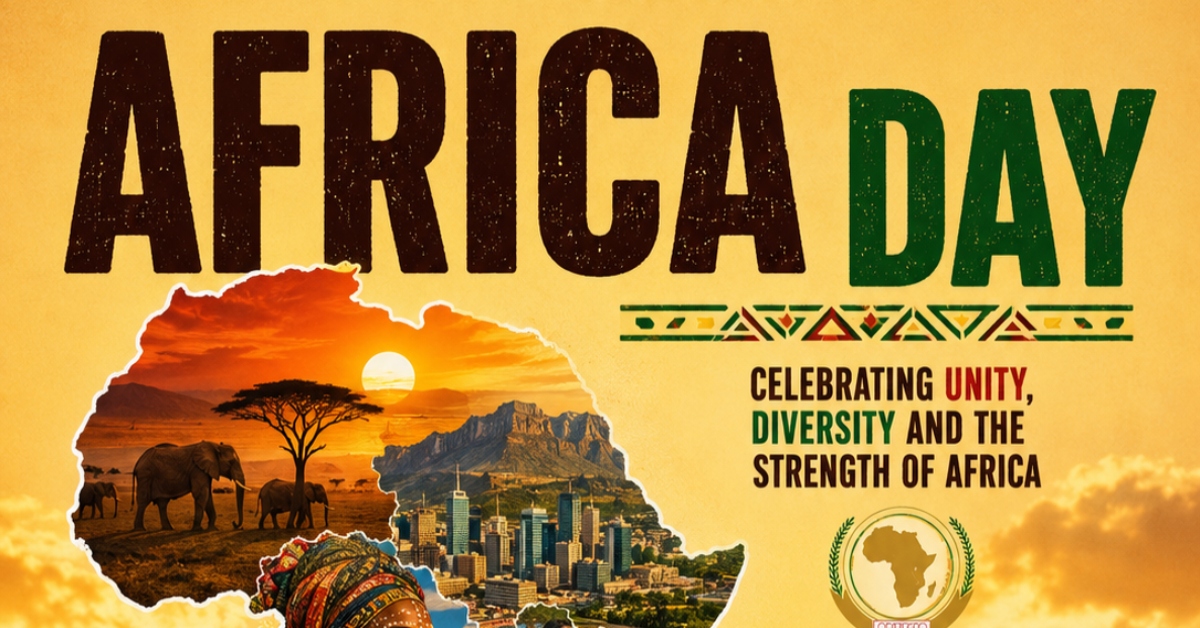
Africa belongs to all Africans, not just one region, language group, or political bloc.
Every year on May 25, Africa commemorates Africa Day, a moment that celebrates unity, resilience, and the shared ambition of an entire continent.
This story is written and edited by Global South World
The day marks the founding of the Organisation of African Unity (OAU) in 1963, the institution that later evolved into today’s African Union (AU). It is also a moment to reflect on the leaders who have carried the responsibility of representing Africa on the global stage.
At the centre of that responsibility is the Chairperson of the African Union.
The Chairperson is elected by the Assembly of Heads of State and Government for a one-year term, with the role rotating among Africa’s five regions. This rotational structure reflects one of the AU’s core principles: Africa belongs to all Africans, not just one region, language group, or political bloc.
Over the years, the office has become a mirror of Africa itself by reflecting the continent’s diversity, political evolution, and regional balance.
Southern Africa’s early influence
When the African Union formally succeeded the Organisation of African Unity in 2002, South Africa’s Thabo Mbeki became the first Chairperson of the AU. His leadership represented the rise of post apartheid South Africa and the growing influence of Southern Africa in continental affairs.
Southern Africa has continued to produce influential AU Chairpersons. Leaders such as Joaquim Chissano of Mozambique, Bingu wa Mutharika of Malawi, Jacob Zuma, and later Cyril Ramaphosa of South Africa each brought different priorities to the continental agenda. Their tenures often focused on economic integration, industrialisation, peacebuilding, and strengthening African institutions.
Most recently, Angola’s João Lourenço emerged as another prominent Southern African leader to chair the Union, reinforcing the region’s continued diplomatic influence within continental politics.
West Africa’s diplomatic presence
West Africa has also played a defining role in AU leadership.
Ghana’s John Agyekum Kufuor served as AU Chairperson during a period when democratic governance and regional cooperation were becoming central topics of conversation across the continent. His leadership reflected Ghana’s longstanding Pan-African legacy rooted in the vision of Kwame Nkrumah, one of Africa’s earliest champions of continental unity.
Other West African leaders who have chaired the AU include Nigeria’s Olusegun Obasanjo, Senegal’s Macky Sall, and leaders from Mali and Mauritania. Their leadership often coincided with periods when Africa faced major economic negotiations, peacekeeping challenges, and governance transitions.
West Africa’s recurring presence in AU leadership reflects the region’s political importance and its long history of shaping continental discourse through ECOWAS diplomacy, peacekeeping efforts, and democratic transitions.
East Africa and the symbolism of Addis Ababa
East Africa occupies a uniquely symbolic position within the African Union because the AU headquarters is located in Addis Ababa, Ethiopia.
Ethiopian leaders, including Prime Minister Meles Zenawi and Prime Minister Hailemariam Desalegn, held the AU chairmanship during critical moments for the continent. Ethiopia’s historical role as one of Africa’s few nations never fully colonised gives it a unique moral and diplomatic standing in African affairs.
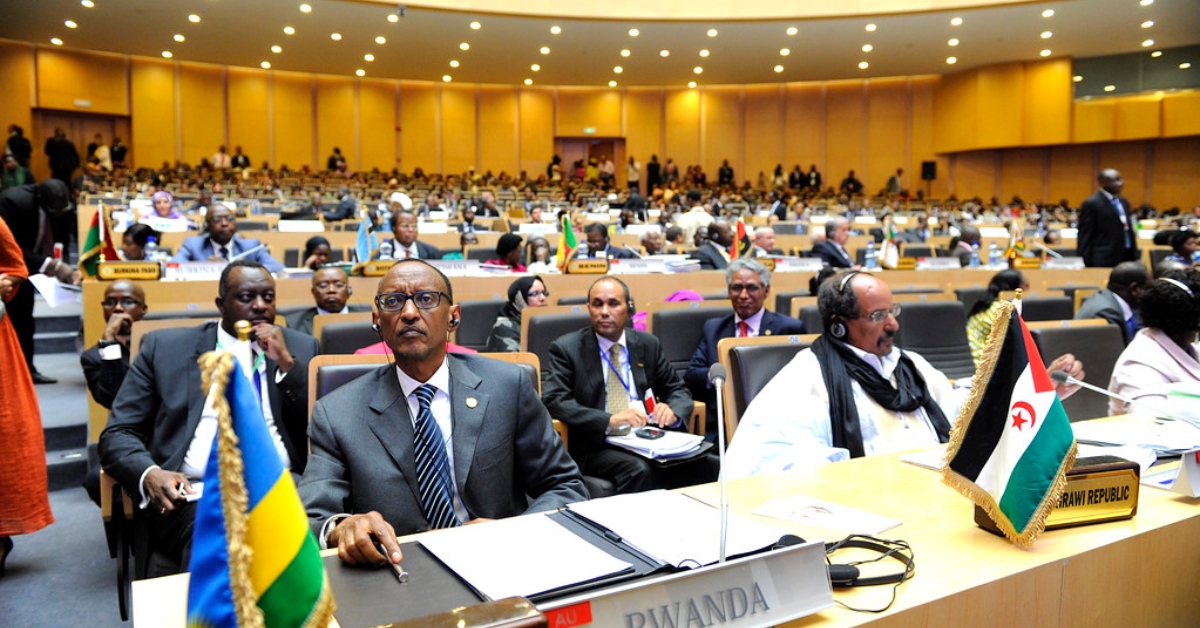
Beyond Ethiopia, Rwanda’s Paul Kagame became one of the most internationally recognised AU Chairpersons in recent years. Kagame strongly pushed for institutional reform, financial independence for the AU, and implementation of the African Continental Free Trade Area. His tenure signalled a modernising vision for the Union focused on efficiency, accountability, and economic competitiveness.
The Union’s current chairperson, Burundi’s Évariste Ndayishimiye, is also from this region.
North Africa’s strategic influence
North African states have also occupied the AU chairmanship during pivotal periods in Africa’s modern history.
Egypt’s Abdel Fattah el Sisi chaired the AU at a time when infrastructure development, migration, terrorism, and investment became central continental priorities. Libya’s Muammar Gaddafi, despite his controversial legacy, was one of the strongest advocates for a “United States of Africa” and frequently pushed for deeper political integration across the continent.
Algeria and Mauritania have likewise contributed leadership through the AU structure, often bringing strong diplomatic influence shaped by North Africa’s connection to both Africa and the Arab world.
North Africa’s leadership within the AU reflects Africa’s geopolitical complexity and the continent’s strategic position between Europe, the Middle East, and the Global South.
Central Africa’s representation
Central Africa has had comparatively fewer AU Chairpersons, but its representation remains important in preserving the Union’s principle of regional inclusion.
Leaders from countries such as the Republic of Congo and Chad have occupied the role during periods marked by peace and security concerns, particularly regarding instability in parts of Central Africa and the Sahel.
The AU’s rotational leadership structure ensures that no region is permanently sidelined, even when political and economic influence differ across the continent.

This article was originally published by Global South World and is republished here with permission. View the original article.
Global South World was created to address the emergence of influential nations outside traditional power structures in geopolitics. Our mission is to amplify voices from the Global South and raise awareness of changes and trends in those countries.