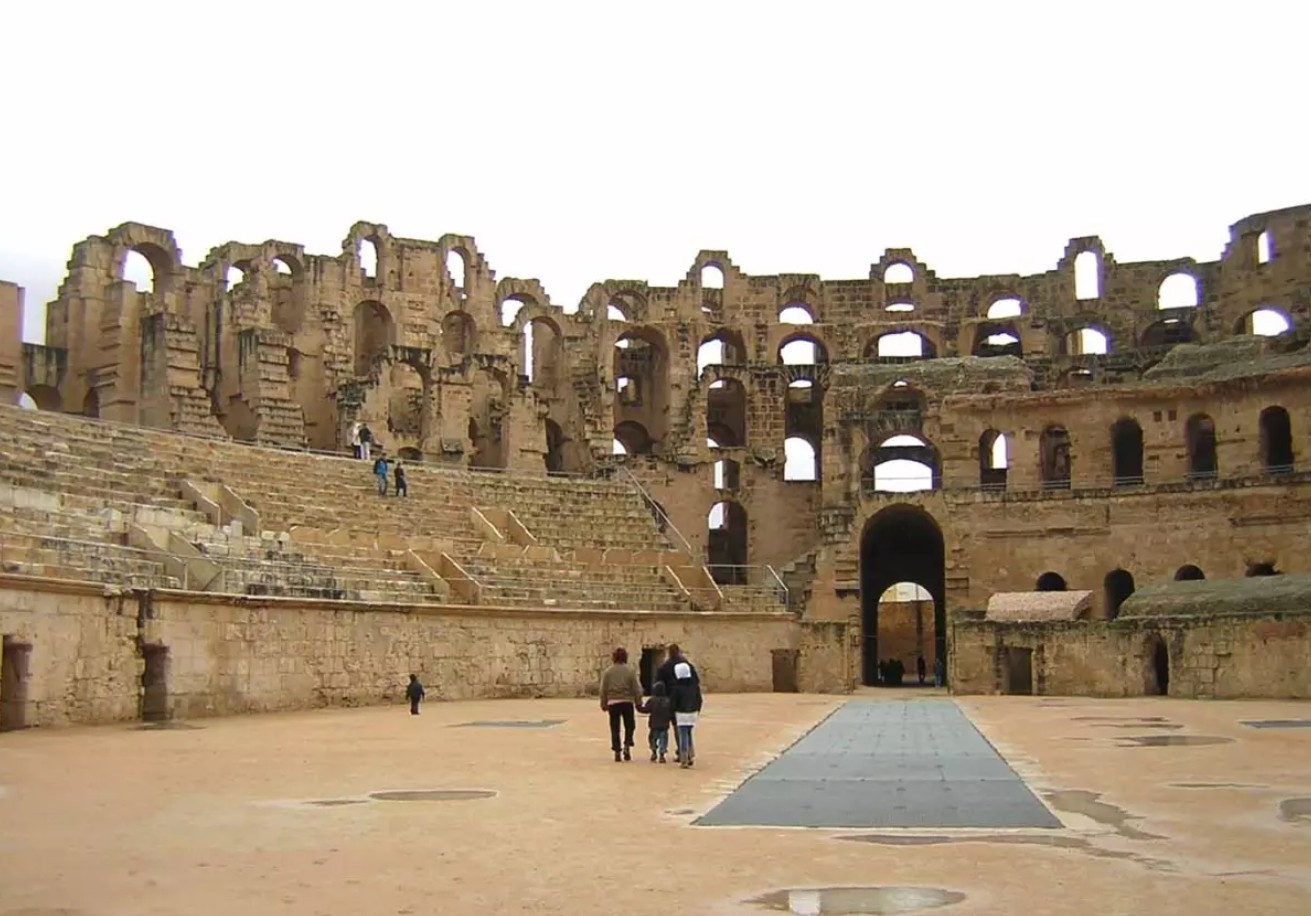
Tunisia’s compact size hides an extraordinary concentration of cultural and historical treasures, including nine UNESCO World Heritage Sites that span more than 3,000 years of history. Originally inhabited by Berber tribes, the country later served as home to Phoenician Carthage, Roman colonies, and early Islamic settlements—each leaving a distinct archaeological footprint. Highlights include the 3rd-century Amphitheatre of El Jem, one of the best-preserved Roman arenas in the world; the ancient ruins of Carthage just outside the capital Tunis; and Kairouan, the fourth holiest city in Islam. The low-density island settlements of Djerba—featuring the newly restored El Ghriba Synagogue—join structural wonders like the 8th-century Medina of Tunis and the Roman hillside town of Dougga. Additionally, visitors to the recovered wetlands of Ichkeul National Park, a crucial ecological sanctuary for thousands of migrating storks and flamingos, can enjoy activities such as boat tours and birdwatching.
Los Angeles Times