Two years after the continent’s banking leaders declared that artificial intelligence could no longer be a sideline experiment, the 2026 Finance Transformation Africa (FTA) summit will force a harder question: Who has actually built the roads?
Scheduled for 5-6 August at the Maslow Hotel in Sandton, this year’s gathering (expanding from banking into wealth, insurance, payments and lending) lands at an uncomfortable inflection point. According to new market data, 88% of African financial organisations have now embedded AI agents into operations. Yet the promised leap in cross-border efficiency remains obstructed by fragmented payment rails, legacy core systems, and a growing anxiety over cyber-resilience.
“We are moving decisively beyond the generative AI hype cycle that dominated 2025 boardroom discussions,” said Vanessa Leyka, CEO of Seraph Network, the organising company
“The 2026 agenda is structured as a delivery roadmap. If you attended last year to learn about ‘what AI could do’, this year you are expected to show how you are scaling predictive intelligence, opening your architecture, and securing real-time trust.”
That shift in tone is directly informed by two parallel realities documented in recent months.
In February 2026, the integration of Kenya’s Pesalink with the Pan-African Payment and Settlement System (PAPSS) demonstrated that cross-border payment interoperability is finally moving from policy ambition to technical fact; allowing local currency settlements across previously siloed corridors. The FTA agenda has responded by dedicating a full “Future of Payments” stream to the question of how banks, telcos and fintechs attach to these emerging rails without recreating the fragmentation they were meant to solve.
At the same time, a March 2026 report on African AI adoption revealed that 88% of organisations are now deploying AI agents, but the competitive advantage is accruing to those who moved beyond proof-of-concept to predictive intelligence; using real-time data to automate risk assessment, claims handling and credit decisioning before the customer even clicks ‘apply’. The summit’s Lending and Insurance streams will dissect exactly those use cases.
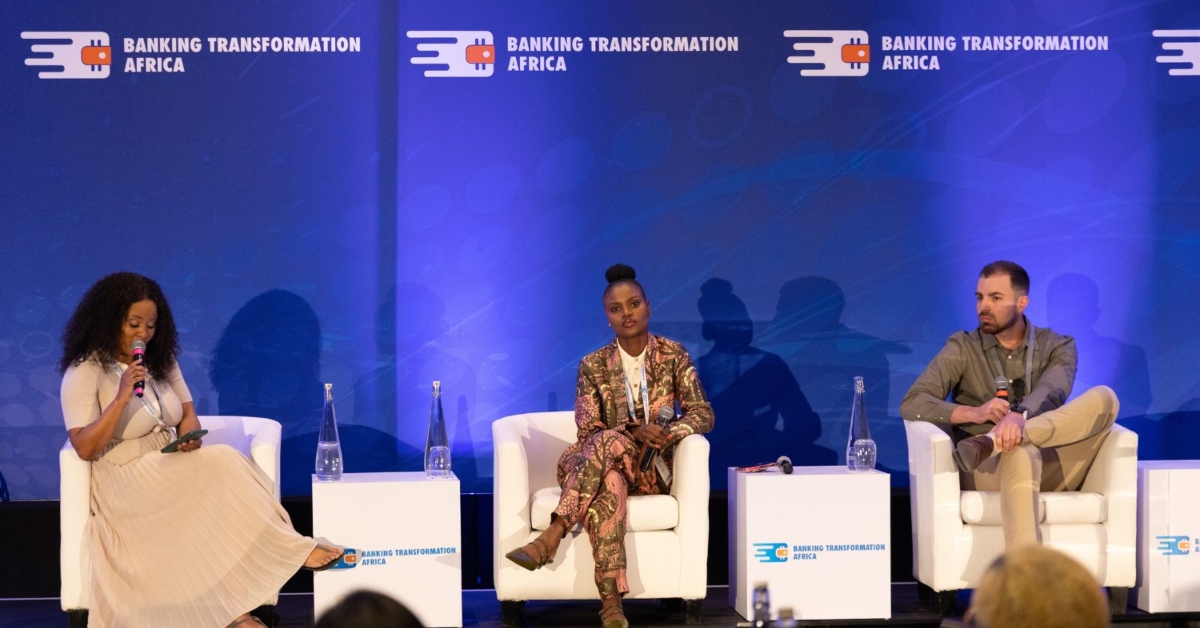
Banking Transformation Africa 2025 documented a recurring theme from senior bankers: digital transformation fails when it is treated as a narrow technology project rather than a fundamental infrastructure rebuild. Legacy systems remain the single largest barrier to seamless, omnichannel experiences, and open banking cannot succeed when bolted onto closed, siloed mainframes. According to the report, executives stressed that the winners in the coming years will be institutions that have already migrated decisioning to the cloud and opened their APIs; not as a trend, but because interoperability has become both a regulatory and commercial necessity
That observation is amplified by the South African Reserve Bank’s working paper on open banking and financial inclusion, released in March 2026, which explicitly ties data sharing to bringing marginalised customers into formal credit systems. The FTA agenda’s panel on “Open Finance, Interoperability and the Future of Cross-Border Payments” (Day 1) and the dedicated “Digital Identity, KYC & Fraud Prevention Across Borders” session (Day 2) are structured to answer the operational question that paper raises: how, not just why.
Notably, the summit has abandoned single-track thinking. For the first time, one ticket buys access to four co-located transformation streams: Wealth, Insurance, Payments and Lending – plus the main Finance Transformation Africa stage. The message is unambiguous: financial services are no longer siloed product businesses. They are data platforms competing on customer experience, fraud prevention and real-time decisioning.
Three years ago, wealth managers and claims officers rarely sat in the same conference room. Now they are discussing the same critical issues: cyber-resilience, cloud migration and embedded finance. The summit’s four-stream structure, the organisers note, finally reflects that convergence.
For an industry that has talked endlessly about “leapfrogging”, the 2026 agenda suggests a more demanding reality: leapfrogging requires landing. That landing zone: borderless infrastructure, automated intelligence and hardened security is now on the table.
For more information, visit https://financetransformationafrica.com/
ABOUT FTA 2026
Finance Transformation Africa 2026 takes place on 5‑6 August at The Maslow Hotel in Johannesburg, South Africa, bringing together C‑suite executives, regulators, innovators and technology providers from banking, insurance, payments, lending and wealth. The event comprises one flagship summit and four co‑located streams – Wealth Transformation Africa, Insurance Transformation Africa, the Future of Payments Summit, and Lending Transformation Africa – featuring plenary keynotes, panel discussions, fireside chats, case studies, workshops and curated networking sessions. Topics on the agenda include digital modernisation and infrastructure, open finance and interoperability, AI and predictive intelligence, cyber resilience, fraud prevention, cloud migration, embedded finance, operational efficiency, and customer experience.
ABOUT VANESSA LEYKA
Vanessa Leyka is the Founder and Chief Executive Officer of Seraph Network, an event and media platform shaping high-level dialogue across Africa’s financial and business landscape. With close to two decades of experience across research and development, commercial strategy, communications, and executive project delivery, she has built a reputation for convening influential stakeholders and driving conversations that matter.
Her work spans Africa, the Middle East, Europe, and the United States, where she has led the development of strategic platforms across finance, telecoms, infrastructure, energy, and technology. Through this, Vanessa has established herself as a trusted voice in connecting policy, capital, and innovation particularly within Africa’s rapidly evolving financial ecosystem.As the driving force behind the Finance Transformation Africa Summit, she plays a central role in shaping discourse around digital finance, banking innovation, and inclusive growth. Her focus is on bringing together senior decision-makers to explore practical solutions, unlock investment, and define the future of finance on the continent