A landmark UK investment deal, a US policy reset, and a Dakar political crisis define the week’s business landscape across Africa.
Ghana signed a £215 million growth partnership with the UK in London yesterday, anchored by the Gulf of Guinea’s first commercial-scale maritime dry-dock facility. The Dangote IPO subscription window is confirmed for August. And MCB launched a $1 billion trade finance facility for African markets. The constructive news is real — but so is the counterweight. Senegal’s political crisis deepened overnight as PASTEF pulled out of the new government and Sonko took control of parliament as speaker, putting the June 8 IMF resumption target in serious doubt.
Lead Story »
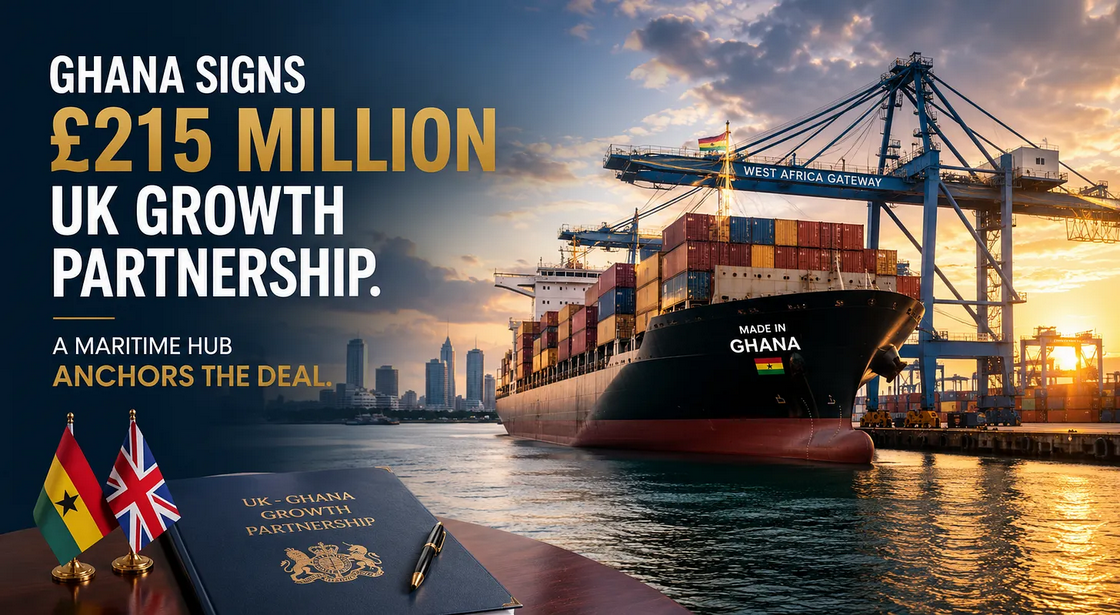
Ghana Signs £215 Million UK Growth Partnership. A Maritime Hub Anchors the Deal.
Signed in London yesterday by President Mahama and UK Deputy Prime Minister David Lammy, the partnership is Ghana’s most significant bilateral investment agreement with the UK in years — and a signal that West Africa’s most stable democracy is pulling ahead in the competition for international capital.
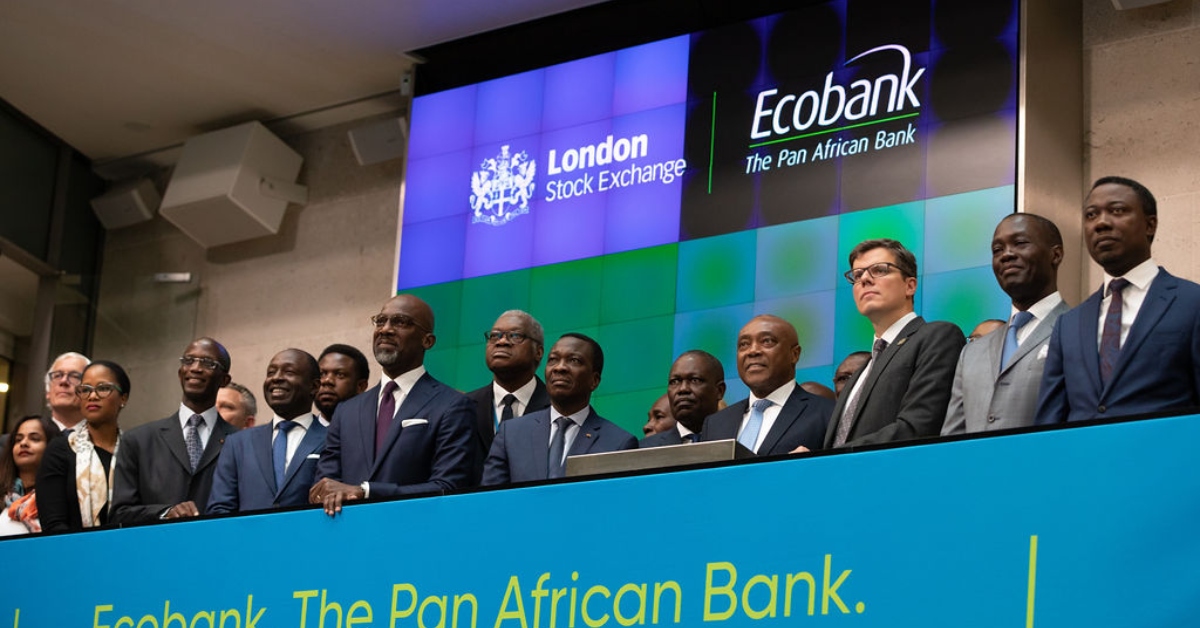
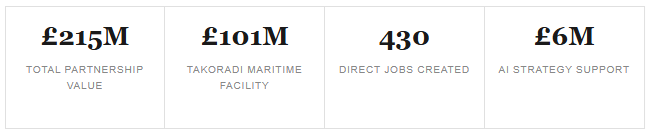
Ghana signed a UK-Ghana Growth Partnership at an investment summit in London on June 1, with total deals valued at up to £215 million over a 2026 to 2028 roadmap targeting private sector growth, infrastructure, and youth skills. The headline commitment is a £101 million PIDG-backed initiative to build the Gulf of Guinea’s first commercial-scale ship repair and dry-docking facility at Takoradi Port, creating 430 direct jobs. A £6 million partnership supports Ghana’s AI strategy and university technology collaboration. A £4 million programme funds specialist healthcare training. Mahama told assembled investors: “Ghana is open for business. We seek investors prepared to build long-term partnerships grounded in mutual respect, transparency, and shared prosperity.”
The summit covered fintech, digital assets, agribusiness, and critical minerals. The Takoradi facility significantly expands the Gulf of Guinea’s dry-docking capacity and reduces costs and turnaround times for the offshore oil and gas sector operating across Nigeria, Ghana, Côte d’Ivoire, and Senegal’s emerging fields. The partnership arrives as Ghana’s macro fundamentals have improved markedly: the cedi has stabilised, inflation has moderated sharply from its 2022 to 2023 peak, and the government is on track with its IMF programme.
Why It Matters: The Gulf of Guinea has limited commercial-scale ship repair capacity, with vessels frequently travelling to Las Palmas, Durban, or Singapore for larger dry-docking jobs. The Takoradi facility significantly expands that capacity and reduces costs and turnaround times for the offshore oil and gas sector operating across Nigeria, Ghana, Côte d’Ivoire, and Senegal’s emerging fields. For investors, the broader signal is that Ghana under Mahama is systematically closing infrastructure gaps that have historically deterred capital, while its IMF programme adherence provides the macro stability that distinguishes it from neighbours currently in fiscal distress.
This Week »
Political Risk · Senegal
Senegal: PASTEF Pulls Out of New Government. Sonko Controls Parliament. IMF Talks Are Six Days Away.
Ousmane Sonko announced on June 1 that PASTEF will not participate in the new government formed by Prime Minister Ahmadou Al Aminou Lo, just one hour before the 30-member cabinet was unveiled. Finance Minister Cheikh Diba was retained and given an expanded portfolio covering the economy, providing continuity for the IMF negotiations. Three PASTEF members appear to have accepted posts despite Sonko’s announcement. PASTEF controls 130 of 165 National Assembly seats, and Sonko was elected speaker last week with 132 votes, giving him direct control over the legislature. Any reform legislation required by the IMF must pass through an assembly Sonko now chairs. He has publicly opposed IMF debt restructuring on sovereignist grounds. With debt at 132% of GDP and a $1.8 billion programme frozen, the path to a credible reform package before June 30 is narrowing. Watch June 8 as the critical date.
Capital Markets · Nigeria
Dangote IPO: August Subscription Window Confirmed. London Secondary Listing Under Review.
The Dangote IPO timeline has crystallised. The prospectus was filed with Nigeria’s SEC in April. The NGX primary listing is targeted for June to July, with the public subscription window confirmed for August. A London secondary listing, with JPMorgan, Citigroup, and Standard Bank as advisers, is under active consideration. The offering is approximately 10% of equity at a $40 to $50 billion valuation, with dollar dividends pending final SEC approval. The previous record African IPO was MTN Nigeria in 2019 at $876 million. This targets five to six times that figure.
Geopolitics · United States / Pan-African
US Signals a Fundamental Reset on Africa. Commercial Deals Replace Development Aid as the Frame.
The US announced a fundamental reset of its Africa strategy at the Africa Day Forum in Washington on June 1. Deputy Assistant Secretary Nick Checker outlined an approach under Trump and Rubio defined as a “disciplined, pragmatic, and interest-driven strategy rooted in flexible realism” — shifting from a development-first lens to commercial partnerships and national interest alignment. Future US security assistance will prioritise nations that lead their own security responses. For investors, the implications are direct: DFC financing will follow commercial returns, AGOA’s future is tied to bilateral trade deals rather than multilateral frameworks, and American capital into Africa flows through deal structures rather than grant pipelines. African governments that can present bankable commercial partnerships to Washington are better positioned than those seeking aid relationships.
Development Finance · Pan-African
AfDB Injects $125 Million Into Africa’s Guarantee Platform to Attract Private Capital.
The AfDB will inject $125 million into ATIDI, the African Trade and Investment Development Insurance platform, to become its largest shareholder, AfDB President Sidi Ould Tah confirmed on June 1. The move reflects a deliberate pivot: as development aid from wealthy nations fell nearly 25% last year, the AfDB is shifting toward guarantees and derisking instruments to crowd in private capital. The AfDB Annual Meetings in Brazzaville simultaneously released the African Economic Outlook 2026, projecting stronger average GDP growth despite global uncertainty. For investors, the ATIDI injection is actionable: more guarantee capacity means more derisked structures for infrastructure, trade finance, and energy transactions. The AfDB under Ould Tah is repositioning from lender of last resort to catalyst for private capital at scale.
Ghana enters June 2026 as one of West Africa’s most active investment destinations. President Mahama’s Reset Agenda has combined fiscal discipline, IMF programme adherence, and aggressive international outreach, culminating in this week’s London summit. The cedi has stabilised, inflation has moderated sharply from its 2022 to 2023 peak, and offshore oil at Jubilee and TEN continues. The gold sector is where complexity is highest: the combination of a 30% central bank offtake requirement, sliding-scale royalties up to 12%, GoldBod gatekeeping, a December 2026 local contractor deadline, and the Damang localisation represents a comprehensive reset of the sector’s fiscal and operational framework. Newmont, AngloGold Ashanti, and Zijin are recalibrating financial models in real time. Outside extractives, the operating environment is broadly favourable with a functional legal system and an independent judiciary.
Opportunities: Gold and critical minerals services, offshore oil and gas at Jubilee and TEN fields, maritime infrastructure linked to Takoradi port expansion, fintech and digital financial services in Accra, agri-processing including cocoa and cashew value chains, and manufacturing for the ECOWAS regional market. The UK partnership opens additional entry points in AI, health, and education services.
Risks: Gold sector resource sovereignty reforms are compressing margins across all major operators and create uncertainty for new investment decisions. Government procurement can be slow and opaque. External debt remains elevated despite IMF programme progress. Cocoa sector structural issues persist. Labour relations in mining are under strain following the Damang transition.
Operating Tips: English is the language of business and government. Accra is the commercial hub; base regional West Africa operations here for English-speaking market access. The legal system follows common law and is functional for commercial disputes. Free zones at Tema and Sekondi-Takoradi offer duty-free and tax-incentivised platforms. Build relationships with the Ghana Investment Promotion Centre early for large-project approvals. Local partnerships are valued particularly in the extractives sector.
Country intelligence sourced from the Africa.com Doing Business in Africa series. Read the full Ghana profile, including IOA’s research analysis.
In Brief »
- DRC · Banking: Equity Group confirmed plans to establish two insurance businesses in the DRC, deepening its push into what has become the group’s most profitable market outside Kenya. Equity BCDC is now the DRC’s second-largest bank, with 2025 profit up 58% to KSh24.7 billion, the fastest absolute profit growth of any subsidiary in the group. The insurance expansion follows the corridor banking logic driving Equity’s Angola and Mozambique acquisition hunt. Source
- Mauritius · Trade Finance: Mauritius Commercial Bank launched a $1 billion trade finance facility on June 1, covering working capital, letters of credit, and structured trade solutions for SMEs across Africa. The move reinforces Mauritius’s ambition as Africa’s offshore financial centre and arrives as AfCFTA and Lobito Corridor trade flows generate rising demand for continental trade finance instruments. Source
- South Africa · Politics: A parliamentary impeachment panel sat for the first time on June 1 to hear a motion against President Ramaphosa linked to the Phala Phala farm scandal. The proceedings add political uncertainty to an economy still trying to convert the SAIC’s R890 billion in investment pledges into ground-level activity. Source
- East Africa · Shipping: Somali piracy has returned, fuelled by political turmoil, aid cuts, and the Iran war’s disruption to Indian Ocean shipping lanes, according to new reporting from AllAfrica. For operators and investors moving goods through East African ports and the Indian Ocean corridor, the resurgence is a live security and insurance cost risk that was largely absent for the past decade. Source
- Nigeria · Energy: Oando has set June 12 as the date for its long-delayed 2025 audit, resolving a governance overhang that has weighed on the stock since the company completed its acquisition of Nigerian Agip Oil Company’s upstream assets. The audit date gives investors and lenders a clearer timeline for normalised financial reporting from one of Nigeria’s largest indigenous oil producers. Source
- Africa.com · Fintech: Africa.com reports that the 7th Africa FinTech Forum will convene in Nairobi on June 10, bringing together fintech leaders, regulators, and innovators to address financial inclusion, digital assets, and next-generation payment systems. The forum’s timing reflects Nairobi’s consolidating position as the continent’s fintech regulatory and innovation hub, a week ahead of the Dangote IPO listing window. Read on Africa.com
What Investors Should Watch »
- Senegal IMF Talks · Week of June 8: The June 8 resumption target is now the most consequential single date in Senegal’s economic calendar. Watch whether Finance Minister Diba can present a credible reform programme with Sonko controlling parliament. A failed or deferred resumption would widen Eurobond spreads and could trigger a credit rating review. A successful resumption with even partial legislative backing would stabilise the investment case.
- Dangote NGX Listing · June to July: The primary NGX listing is now weeks away. Watch for the formal listing approval from the Nigerian Exchange and any SEC commentary on the dollar dividend mechanism, which remains pending final regulatory sign-off. The London secondary listing decision will also likely be confirmed in this window.
- Ghana Gold Sector Negotiations: The Chamber of Mines and Bank of Ghana remain in unresolved talks on the 30% offtake demand and pricing terms. A resolution before the December contractor deadline would remove a significant uncertainty for Newmont and AngloGold Ashanti’s operating plans through 2027. A breakdown triggers a formal dispute process.