The Satellite That Never Landed
Act I: A Signal from Above
On a clear night in the Northern Cape, where the Karoo stretches out like a cracked canvas under a billion stars, internet connectivity is less a utility and more a rumour. Schoolchildren here have learned to do homework by daylight, before the mobile data runs out. Teachers send lesson plans by word of mouth. A satellite dish, if you could afford one, would be the closest thing to a miracle.
It is against this backdrop — of distance, of need, of infrastructure that has never quite caught up — that Elon Musk’s Starlink was supposed to arrive. And yet, as of early 2026, it has not. The reasons why are more complicated, and more revealing, than Musk would have you believe.
Act II: The Claim and the Paper Trail
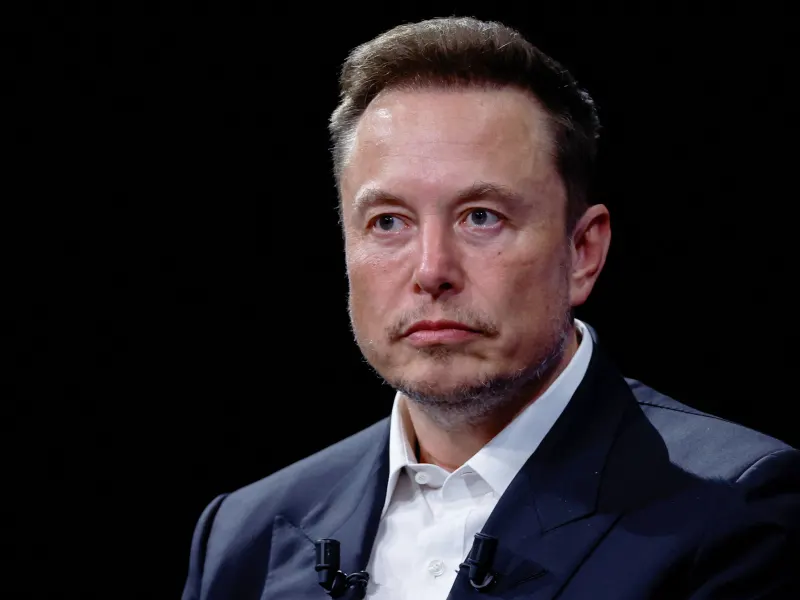
For nearly three years, Musk has told a consistent story: he cannot bring Starlink to his birth country because South Africa’s racial equity laws bar him from doing so. “I’m in this situation where I was born in South Africa but cannot get a license to operate Starlink because I’m not Black,” he said at the Qatar Economic Forum in May 2025. He has repeated versions of this claim on X, in interviews, and in the political orbit of the Trump administration, where it has found an eager audience.
The problem is that South Africa’s government tells a different story entirely.
In April 2023, the country’s Department of Communications stated plainly that Starlink had not submitted the applications required to offer its services. The foreign ministry, speaking to international press in March 2025, said Starlink was “welcome to operate in South Africa provided there’s compliance with local laws.” The Independent Communications Authority of South Africa — the body that actually issues the licenses — confirmed in April 2025 that Starlink had not applied for one.
Not blocked. Not denied. Simply: never asked.
This distinction matters enormously. South Africa’s post-apartheid landscape does require many telecommunications companies to ensure that local Black-owned firms hold at least a 30% stake in their South African operations — a law rooted in the painful, deliberate work of rebuilding economic equity after decades of state-sanctioned exclusion. It is not a blanket prohibition on foreign companies. It is a condition of entry, one that dozens of multinationals have navigated.
And crucially: by late 2025, that condition had begun to soften for Musk specifically. In December 2025, the country’s Minister of Telecommunications issued a directive allowing companies to satisfy the ownership requirement through “equity equivalent investment programs” — financial commitments to community development in lieu of a direct equity share. Starlink’s own website announced plans to invest the equivalent of roughly $30 million to bring free high-speed internet to 5,000 rural schools, potentially reaching more than 2.4 million students annually.
The paperwork, as of publication, remains unfiled. The schools remain unconnected.
Act III: What the Signal Carries
There is a cost to this gap between narrative and reality — and it is not paid by Elon Musk.
It is paid by the child in the Karoo with a geography assignment and a mobile signal that cuts out at dusk. It is paid by the rural clinic that cannot access telemedicine platforms. It is paid by the small business owner who has been waiting, patiently, for the kind of connectivity that Starlink has already delivered to remote communities across Africa — in Nigeria, in Kenya, in Rwanda.
Musk’s framing — that he is the aggrieved victim of racial discrimination — has not only muddied the factual record. It has fed into a broader political narrative, amplified by the Trump administration, that frames South Africa’s equity laws as persecution rather than as the considered, if imperfect, legacy of a society rebuilding itself after apartheid. That narrative has consequences, both diplomatic and human.
South Africa is not a country without complications. Its equity frameworks are debated within its own borders, by economists, by entrepreneurs, by citizens of every background. But the debate deserves honesty about what the laws actually say — and what Starlink has actually done, or not done, to comply with them.
A deal has been reached. A pathway exists. The only thing missing is the application.